
Introduction
This paper is part of an initiative to develop a more grounded and structured local approach to addressing hate speech in the Syrian context. It is informed by an understanding of hate speech as a complex, multi-layered phenomenon that extends beyond overt hostility to include more entrenched forms of exclusion, social stigma, and the political and media instrumentalization of victims’ suffering—dynamics that perpetuate marginalization and undermine recognition and redress.
The paper proceeds from the premise that hate speech in Syria cannot be effectively analyzed or addressed in isolation from the broader structural conditions in which it is produced. Chief among these are the absence of justice, the limited representation of victims, and the erosion of trust among social groups. Addressing hate speech therefore requires a shift from treating victims as subjects of discussion to engaging them as key actors in shaping public discourse on issues that affect them.
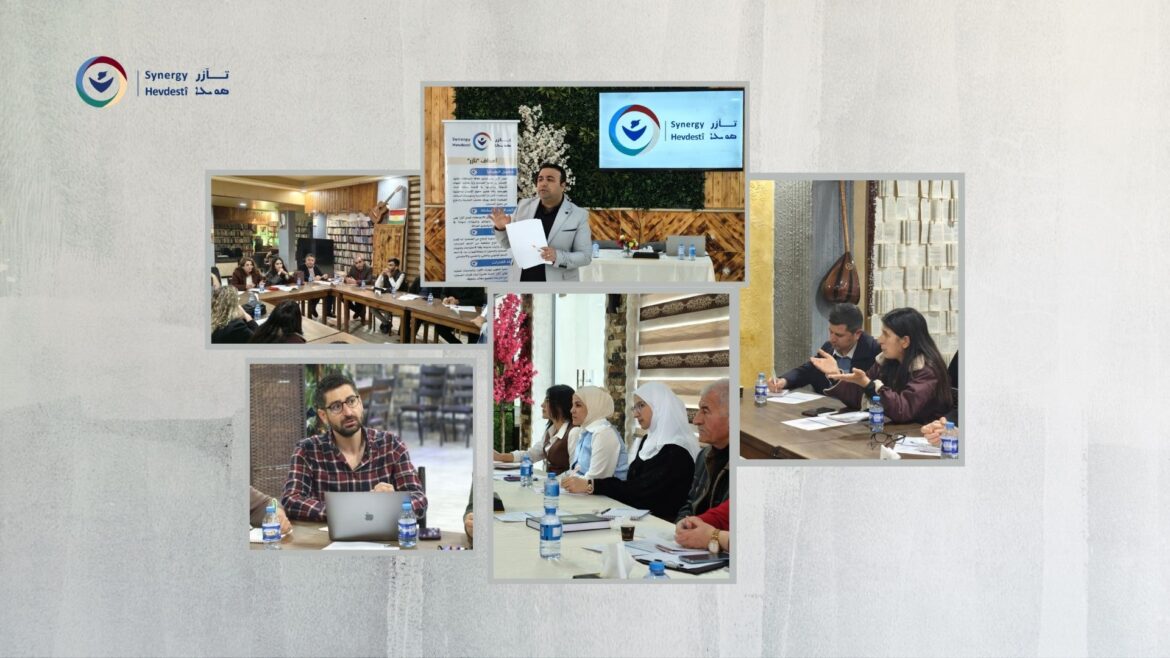
This analysis draws on the outcomes of six community dialogue sessions held in Qamishli, Al-Hasakah, Raqqa, Salamiyah, Afrin, and Homs between 5 and 12 April 2026. The sessions brought together 88 participants, including 48 women, reflecting a range of experiences and perspectives.
These dialogues convened victims alongside influential public actors to examine the relationship between hate speech and victim representation, and to explore ways of fostering alternative narratives grounded in justice, recognition, and accountability—contributing to reduced polarization and stronger social cohesion.
I. Methodological Framework
The sessions were structured around a focused discussion methodology, designed to bring together a small but diverse group of participants in order to foster in-depth, balanced exchanges between individuals with lived experience and actors who shape public discourse. This approach is particularly well suited to the topic, as it enables the integration of victims’ firsthand perspectives with the views of those influencing public narratives.
Participants reflected a broad cross-section of stakeholders, including victims and their families, journalists and content creators, civil society representatives, youth activists, and local community leaders. Gender balance was a core consideration, with women accounting for no less than 40% of participants in each session.
The sessions were guided by a set of core principles, most notably the creation of a safe and respectful space for dialogue, the protection of privacy and individual experiences, the avoidance of direct political confrontation, and a commitment to ensuring that victims’ voices were neither sidelined nor instrumentalized. Discussions were facilitated to ensure balanced participation and to generate practical, actionable insights that could inform recommendations and policy development.
The discussions centered on several key themes, including:
- How victims’ issues are represented in public discourse, and the prevailing patterns shaping this representation.
- The impact of such representations on victims themselves, as well as on broader social relations.
- The roles and responsibilities of different actors in preventing and responding to hate speech.
- Opportunities to develop more responsible alternative narratives grounded in recognition and justice.
II. Key Findings
1) Hate speech extends beyond direct incitement to encompass marginalization, instrumentalization, and misrepresentation
Participants’ understanding of hate speech went well beyond insults or overt incitement. It was seen to include a broader set of practices, such as reducing victims to statistics, instrumentalizing their experiences in political contestation, and framing their stories through narratives that do not reflect their own voices. In this context, the exclusion of victims from public debate—or speaking on their behalf without their participation—emerged as a form of marginalization that reproduces harm.
Discussions also underscored how hate speech permeates everyday life and social relations, particularly through stigma associated with sectarian or regional identities and the formation of negative stereotypes about specific communities or places. This was reflected in discriminatory practices in workplaces and universities, as well as in routine social interactions, pointing to the persistence of division even within close social circles.
Participants further noted that dominant public discourse often treats victims as transient news content or as tools for advancing political positions, without fostering a meaningful understanding of their experiences or enabling them to speak for themselves. This dynamic unfolds in a context shaped by polarizing political, media, and religious narratives, alongside a limited presence of discourse grounded in victims’ own perspectives.
At the same time, participants linked hate speech to any practice that undermines the dignity of detainees, the missing, and their families—whether through direct abuse, denial, or the questioning of their lived experiences. Hate speech was also seen as intersecting with national and cultural identities, targeting individuals based on appearance, language, or perceived affiliation—even within the same local community—highlighting the fragility of social cohesion amid rising exclusionary narratives.
2) A direct correlation between the absence of justice and the rise of hate speech
A clear link emerged between the absence of justice and accountability and the escalation of hate speech. Participants emphasized that the suppression of truth, the obstruction of accountability, and the unequal recognition of different victim groups fuel frustration and anger, deepen mistrust, and create conditions conducive to further polarization.
This connection was particularly evident in discussions on transitional justice processes and their limitations, especially in terms of inclusivity. Several participants observed that focusing on specific victim groups, geographic areas, or particular perpetrators can generate a strong sense of discrimination, effectively turning justice from a pathway to redress into a new source of exclusion.
Participants also repeatedly pointed to the marginalization of victims of violations attributed to multiple actors, including ISIS, the Syrian Democratic Forces (SDF), and certain factions and groups that have been incorporated into the Ministry of Defense of the Syrian transitional government. This, in turn, reinforces perceptions of unequal recognition.
In this context, participants stressed that addressing hate speech cannot be confined to awareness-raising efforts alone. It requires more substantive approaches linked to accountability, reparations, the preservation of victims’ dignity, and the development of an inclusive national narrative grounded in equal recognition.
3) Double marginalization: from violation to public discourse
The sessions revealed a high degree of awareness among victims and their families, accompanied by a profound sense of pain and a clear experience of marginalization that extends from the original violation to the ways in which their cases are framed in the media and the public sphere—and, at times, even within certain human rights and civil society initiatives.
Participants noted that victims are often treated as subjects of discussion rather than as rights-holders with agency and voice. This was reflected in the distinction between those who “speak on behalf of victims” and the victims’ own authentic voices. A strong need emerged to move victims from a position of passive reception or symbolic representation to that of active agents, able to shape discourse and influence accountability processes.
This perspective was central to the approach underpinning the sessions, which sought to ensure the meaningful presence of victims and to treat their testimonies as a gateway to understanding the truth, rather than merely as documentary material.
The discussions also pointed to the persistence of social stigma against formerly detained women, some of whom continue to face isolation or rejection even within their immediate communities—compounding the psychological and social impact of their experiences. In addition, a gap in trust was identified between some victims and entities claiming to represent them, rooted in past experiences of politicization or exploitation. This has led to a perception among some victims that their voices are either inaccurately represented or effectively appropriated.
4) The public sphere remains shaped by selective and unbalanced narratives
The sessions indicated that the representation of victims in the public sphere is characterized by several recurring patterns, including selectivity, politicization, reductionism, weak professional documentation, and the absence of an inclusive understanding of victim groups. Participants observed that media coverage often reports events without fostering deeper understanding, due to a lack of context, analysis, and direct testimony—undermining recognition of victims’ experiences and leaving them vulnerable to marginalization or superficial consumption.
Participants also raised concerns about the performance of certain official institutions, particularly in terms of limited transparency, weak engagement with families, and insufficient inclusion of victims and their relatives in policies concerning the missing, detainees, and other affected groups. In practice, this has weakened community-based initiatives and constrained documentation efforts.
In the digital sphere, participants highlighted the rise of new forms of harm, including online extortion, the spread of rumors, and defamation. These practices are sometimes used as tools of pressure or exploitation, contributing to the spread of hate speech and the erosion of trust. The issue of generalization was also emphasized, whereby entire communities are held responsible for the actions of individuals, reinforcing stereotypes and deepening divisions.
5) The escalation of hate speech in post-regime contexts
The discussions indicated that hate speech has not receded following the fall of the regime; rather, it has intensified in certain contexts, particularly amid tensions surrounding relations between the transitional government and the Syrian Democratic Forces in 2026.
This has been reflected in the rise of hostile narratives between Arab and Kurdish communities, weakened expressions of humanitarian solidarity in some cases, and a resurgence of polarization along ethnic, political, and regional lines—especially in digital spaces.
Participants also noted that a significant share of this escalation is driven through social media, including by accounts or actors operating beyond the local context. Individual incidents are often amplified and reframed into generalized narratives, fueling tensions among different communities.
Taken together, these findings point to hate speech in the Syrian context as a dynamic and evolving phenomenon, sustained by political deadlock, the absence of justice, competing narratives, and the lack of an inclusive national framework for mutual recognition.
6) A far-reaching impact beyond victims, affecting social peace and cohesion
The sessions showed that the impact of hate speech extends well beyond victims to the broader fabric of social relations. Narratives that diminish suffering, differentiate between victims, or privilege certain violations over others contribute to the accumulation of new grievances and the erosion of trust.
Participants cautioned that the persistence of such patterns risks deepening social fractures and increasing the likelihood of renewed conflict, particularly in the absence of equal recognition of victims’ rights. At the same time, there was a clear recognition that engaging responsibly with shared experiences of suffering can provide an entry point for building solidarity that transcends divisions.
The discussions also highlighted the psychological impact of such discourse, including heightened fear, a diminished sense of belonging, social isolation, and withdrawal into narrower circles, alongside the reinforcement of retaliatory tendencies and the gradual erosion of trust within communities.
7) The dynamics shaping the production of hate speech in the Syrian context
These findings suggest that hate speech in Syria can no longer be understood as a localized or isolated phenomenon. Rather, it emerges from a complex interplay of digital, political, and social factors that operate across regions and contexts.
The digital sphere plays a central role in both the production and amplification of hate speech. Social media platforms enable the rapid and largely unregulated circulation of information, including inaccurate or decontextualized content, accelerating the formation of narratives while limiting opportunities for verification or correction.
Hate speech also exhibits a translocal character, with narratives moving across contexts without regard for local specificities, leading to broad generalizations that deepen divisions. Discussions further indicated that a significant share of such discourse is produced or reframed outside the local context, whether by actors in the diaspora or by entities seeking to shape public debate in line with particular agendas.
In many cases, this discourse relies on amplifying isolated incidents and recasting them as representative of entire communities, generating rapid and disproportionate escalation dynamics.
This process is further fueled by the absence of reliable sources of information and the weakness of legal and regulatory frameworks governing the public sphere, leaving ample space for manipulation and instrumentalization.
Taken together, these dynamics underscore the need to approach hate speech in Syria as a multi-layered phenomenon that extends beyond individual behavior to the structures, contexts, and systems that produce and sustain it. Addressing it therefore requires integrated responses that combine legal measures, media regulation, and the strengthening of the role of societal actors.
III. Areas of Convergence and Divergence Among Participants
The sessions revealed broad convergence on several key issues. Chief among these was the limited representation of victims in the public sphere, alongside the dominance of selective, politicized, or low-impact narratives. Participants also agreed that the absence of justice, recognition, and accountability is a primary driver of hate speech, and that enabling victims to articulate their own experiences is a critical entry point for addressing this dynamic.
There was also clear agreement on the existence of a trust deficit between victims and certain media and civil society actors, shaped by past experiences marked by inaccuracy or the politicization of how their suffering was represented.
At the same time, differences emerged regarding pathways for response. Some participants called for prioritizing stronger legal and regulatory frameworks to govern media and digital discourse, while others stressed that meaningful change must begin with advancing justice and accountability processes.
Divergence was also evident in approaches to transitional justice. While some participants emphasized the primacy of accountability, others expressed openness to more reconciliatory approaches—provided these do not come at the expense of truth, rights, and recognition.
IV. Key Takeaways from the Sessions
The sessions point to a set of core insights that deepen understanding of hate speech in the Syrian context. These can be summarized as follows:
- Hate speech is embedded in broader structural dynamics that extend beyond language or media, encompassing systems of justice, representation, recognition, and institutional performance—requiring comprehensive approaches to address it.
- The absence of comprehensive and equitable justice across different victim groups, regions, and perpetrators is a central driver of frustration and polarization, and sustains an environment conducive to hate speech.
- The marginalization of victims, or speaking on their behalf without their meaningful participation, reproduces patterns of exclusion and limits the potential for building a more just and accountable public discourse.
- Prevailing media practices exhibit significant shortcomings, including reducing victims’ issues to superficial news coverage, subjecting them to politicization, weak documentation standards, and limited opportunities for victims to express themselves directly.
- Hate speech is shaped by translocal dynamics and by the expanding role of the digital sphere in amplifying and generalizing narratives, accelerating the production of division.
- There are tangible opportunities to foster more responsible alternative narratives, grounded in the empowerment of victims, strengthened community-based documentation, expanded civic participation, improved media practices, and the development of more just and effective legal and institutional frameworks.
V. Practical Recommendations
1) State and public authorities
- Establish a comprehensive legal and institutional framework for victim-related issues, grounded in a clear and inclusive definition of “victim” and ensuring equal recognition without discrimination.
- Ensure transparency and access to information, and develop regular, institutionalized channels of communication with victims and their families that enable meaningful participation.
- Accelerate efforts to document violations, investigate cases, and locate mass graves, while strengthening verification capacities, including the use of DNA analysis where appropriate.
- Advance justice, accountability, and reparations processes in ways that build trust and curb impunity.
- Develop monitoring and evaluation mechanisms to assess the effectiveness of policies and measures aimed at reducing hate speech.
- Enact legal provisions and mechanisms to address hate speech, including the criminalization of incitement and collective attribution, while reinforcing the principle of individual responsibility.
2) Media and content creators
- Adopt binding professional and ethical codes of conduct that ensure respectful and responsible coverage of victims’ issues, and guard against politicization, exploitation, generalization, and incitement.
- Engage victims in the production of media narratives and expand opportunities for them to express their perspectives and experiences directly.
- Develop editorial and technical tools to counter hate speech and misinformation, and strengthen analytical, context-rich reporting rather than relying on fragmented or rapid news coverage.
- Build the capacity of journalists to cover conflict-related issues, including training in trauma-informed reporting practices.
3) Civil society organizations
- Develop sustainable, long-term programs to support victims, centered on empowerment and accompaniment, with psychosocial support as a core component.
- Create and facilitate safe spaces for dialogue between victims and other societal actors, fostering mutual understanding and reducing polarization.
- Support the self-organization of victims and strengthen their advocacy capacities, linking their concerns to broader processes of justice, recognition, and civic participation.
- Develop community-based documentation tools that ensure accuracy and professional standards, enhancing the credibility of narratives.
4) Victims and their associations
- Support the establishment of organized, victim-led initiatives capable of advocacy, representation, and influencing public policy, while accounting for geographic diversity and different patterns of violations, and avoiding the reproduction of internal exclusion.
- Strengthen victims’ capacities in advocacy, documentation, and engagement with media and decision-makers.
- Develop community memory initiatives that preserve victims’ experiences and contribute to building narratives grounded in recognition and justice.
- Foster solidarity among victims that transcends divisions and contributes to reducing social polarization.
This analysis demonstrates that hate speech in the Syrian context is closely tied to the absence of justice and imbalances in victim representation, and is rooted in deeper structures related to recognition and accountability. Addressing it requires repositioning victims as active agents in shaping public discourse, within a framework grounded in equal recognition and justice.
Empowering victims is a critical entry point for reducing polarization, rebuilding trust, and fostering a more cohesive narrative that supports the prospects for social peace.
To view a summary of the report, please click here.
To view the full report, please click here.