
Monday – 6 April 2026
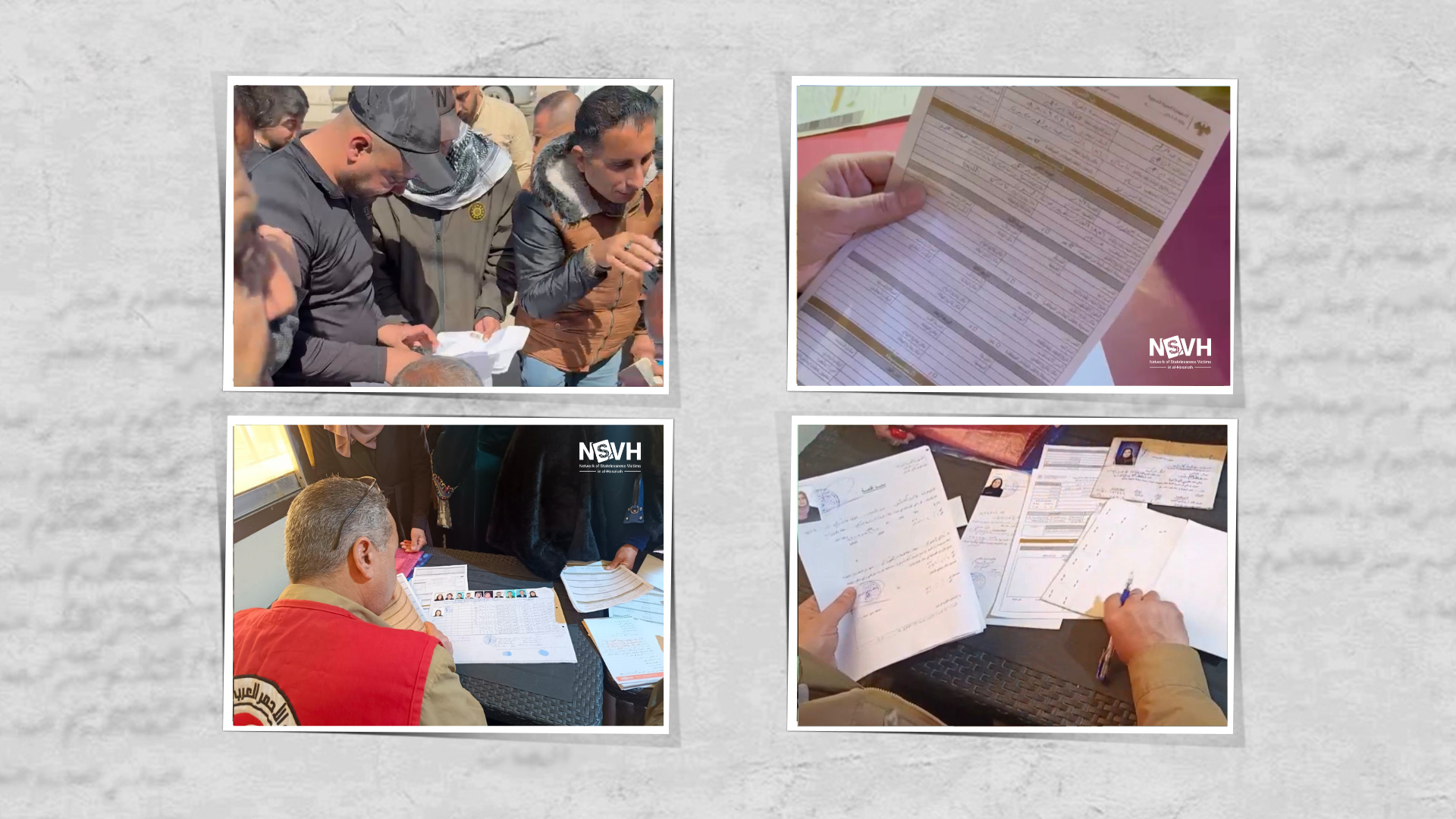
As of today, nationality application centres have begun accepting applications from unregistered Syrian Kurds covered by Decree No. 13 of 2026, marking an important first step toward addressing one of the most severe and enduring forms of deprivation—the denial of the right to nationality.
On the first day, the five centres established across al-Hasakah Governorate (Qamishli/Qamişlo, al-Hasakah, al-Malikiyah/Dêrik, al-Darbasiyah, and al-Jawadiyah/Çil Axa) saw a strong turnout, receiving hundreds of applications. While no official figures have been released yet, early indications highlight the scale of the issue and the significant number of people affected.
At this stage, the centres are focused solely on receiving applications. Subsequent phases will involve review by the relevant committees, biometric fingerprint registration, and personal interviews. The application period has been set at 30 days, with the possibility of extension if needed.
According to field reports, applicants—whether applying individually or collectively—are required to submit an identification certificate with a personal photograph issued by the local Mukhtar (a neighborhood-level administrative official), along with proof of residence confirming their presence within Syrian territory, supported by two witnesses. They may also provide additional documentation demonstrating such presence, such as electricity or water bills, phone bills, or any other documents accepted by the committee. A number of affected individuals have visited the centres to inquire about procedures and required documentation, amid a continued lack of clear information for many.
Field monitoring has also identified several legal and procedural challenges that require urgent attention. Chief among these is the limited awareness of procedures and requirements among the most marginalized groups, which may result in incomplete applications or missed deadlines. There have also been reports of financial exploitation by some Mukhtars (local administrative officials) in exchange for issuing required documents at the outset of the process.
The Network of Statelessness Victims in al-Hasakah (NSVH) further stresses that effectively addressing this issue requires:
- Announcing a clear mechanism for individuals residing outside Syria.
- Expanding awareness campaigns on procedures, deadlines, and required documentation.
- Preventing exploitation and the imposition of unlawful fees, while reducing indirect financial burdens on applicants, particularly the most economically vulnerable.
- Ensuring transparency throughout all subsequent stages, including interviews, biometric registration, and the announcement of results.
This development comes as part of ongoing monitoring of Decree No. 13, issued on 16 January 2026. The decree comprises eight articles, with Article 4 repealing all exceptional laws and measures resulting from the 1962 Special Census in al-Hasakah Governorate. It also provides for granting Syrian nationality to citizens of Kurdish origin residing in Syria—including those classified as Maktoumeen al-Qayd (unregistered persons)—with full equality in rights and obligations.
In a statement issued on 17 January 2026, the Network welcomed Article 4 of Decree No. 13 as an official acknowledgment of the need to remedy the consequences of the 1962 Exceptional Census in al-Hasakah, which arbitrarily stripped tens of thousands of Kurdish citizens of their Syrian nationality.
NSVH reiterate that the right to nationality is a fundamental human right, intrinsically linked to legal recognition and the enjoyment of all other rights. Fully resolving this issue will serve as a critical test of the state’s commitment to justice, equal citizenship, the rule of law, and respect for human rights.
For further information, please visit our website, or contact us directly via:
- Phone/WhatsApp: +964 751 048 3382
- Email: contact@nsvh.network