
Saturday, 24 January 2026
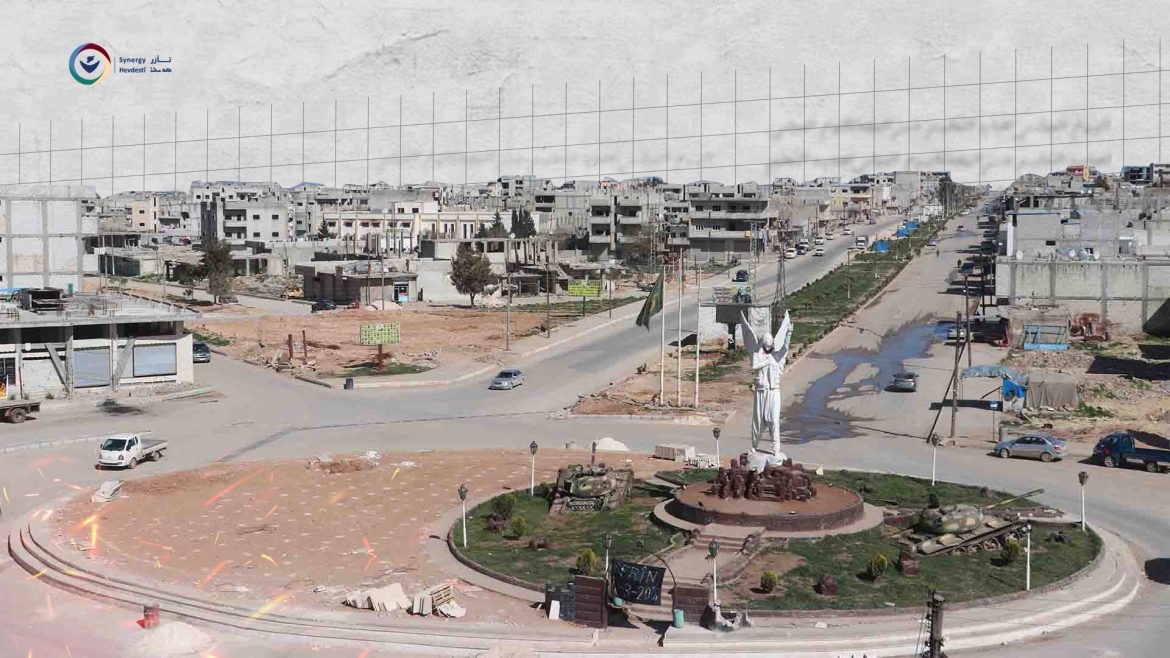
The Kurdish city of Kobani, in the eastern countryside of Aleppo governorate, is facing a rapid and alarming deterioration in its humanitarian situation following its military encirclement by Syrian Transitional Government forces and its complete isolation from surrounding areas. According to the United Nations Office for the Coordination of Humanitarian Affairs (OCHA), all access roads to the city have been closed. Ongoing military clashes have further compounded the crisis, severely restricting humanitarian access and effectively preventing the entry of essential supplies. These developments are unfolding in the absence of safe humanitarian corridors or effective mechanisms to protect civilians and ensure the continuous, unhindered delivery of life-saving assistance.
These developments coincide with large-scale displacement from villages surrounding Kobani, as well as the arrival of displaced people—from Raqqa, Tabqa, and Ain Issa—who are fleeing active hostilities and worsening security conditions. This significant increase in displaced persons has placed extraordinary strain on a city already grappling with severe shortages in resources and basic services. The UN Office for the Coordination of Humanitarian Affairs (OCHA) has confirmed that prolonged disruptions to electricity, water, and internet services are critically limiting residents’ access to essential needs, while food and medical supplies are steadily running out. Health facilities remain operational, but only at an extremely limited capacity.
What was initially presented as a temporary security measure has, in reality, evolved into a comprehensive siege—one that directly threatens civilians’ lives and undermines their ability to survive.
Humanitarian Situation and Access to Basic Services in Kobani:
Food Security and Bread: Kobani is experiencing a worsening shortage of basic food items as household reserves and market supplies continue to decline. This situation is further aggravated by sustained population pressure resulting from repeated waves of displacement, which have exceeded the already limited capacity of local markets. Many resident and displaced families are therefore resorting to harmful coping mechanisms, including reducing the number of daily meals and sharing food among multiple households, increasing the risk of malnutrition and food insecurity.
Water: The city has been without a regular water supply for approximately one week due to the lack of electricity needed to operate water pumping stations. In response, residents have been forced to collect snow, melt it, and store it in household containers for daily use. This unsafe practice poses serious public health risks, particularly for children, elderly persons, and individuals with pre-existing health conditions.
Electricity: Electricity has been completely cut off since the outbreak of hostilities. Even households equipped with solar energy systems are unable to rely on them due to persistent cloud cover and ongoing snowstorms. This near-total collapse of energy sources has directly disrupted heating, water access, and the operation of health facilities, further compounding humanitarian needs.
Internet and Communications: Telecommunications and internet services in Kobani have been entirely disrupted following shelling and the deliberate sabotage of Rcell telecommunications towers in the Sirrin area. The damage included the destruction of batteries and generators, as well as incidents of looting and theft. The only remaining alternatives—limited satellite connections or digital eSIMs linked to external network operators—are costly, unreliable, and inaccessible to most residents. This communications blackout has intensified the city’s isolation and severely hindered documentation, emergency requests, and humanitarian coordination.
Fuel and Heating: Kobani is facing an acute shortage of fuel and heating materials due to its isolation from supply routes in al-Jazira region. This shortage has significantly worsened living conditions amid sharply declining temperatures, with particularly severe consequences for children, older persons, and other vulnerable groups.
Health Situation:
The limited number of remaining health facilities in Kobani continue to operate at critically reduced capacity amid severe shortages of essential medicines, medical supplies, and equipment. Health services are increasingly strained as needs escalate and resources continue to diminish. The United Nations has reported a sharp rise in medical and humanitarian needs, while the World Health Organization and its partners are making efforts to deliver emergency medical supplies, mobile nutrition services, and life-saving care for the wounded, children, and pregnant women.
Urgent health priorities include medications for chronic illnesses, infant formula, heating materials for health facilities, fuel to operate medical generators, and sustained support for ambulance services and medical referral systems. Without immediate intervention, preventable morbidity and mortality are expected to increase.
Within this context, the Kurdish Red Crescent has reported the deaths of five children, including infants, due to extreme cold exposure. These deaths represent a grave indicator of the collapse of basic living and health conditions in the city. They cannot be viewed in isolation, but rather as a direct consequence of the siege, the lack of heating, and the denial of essential supplies. Such fatalities constitute a serious violation of the right to life, particularly the rights of children, and underscore the urgent need for unhindered humanitarian access.
Displacement and Conditions of Displaced Persons:
Kobani is currently hosting tens of thousands of people displaced from surrounding villages, as well as families fleeing Raqqa, Tabqa, and Ain Issa due to ongoing conflict and worsening security conditions. Many have arrived on foot, some bringing their livestock, while others have been forced to seek shelter in schools, public buildings, on the streets, or even inside agricultural vehicles, enduring harsh winter conditions and snowfall.
Humanitarian assistance remains extremely limited. Shelter is insufficient, protection risks are high, and there is a critical shortage of heating materials and winter clothing. Reports of looting of displaced families’ homes have further heightened fear and insecurity, exacerbating the vulnerability of already at-risk groups, particularly women and children.
Entrenched Fears and Waning Trust:
Residents of Kobani—predominantly Kurdish—are increasingly fearful of the potential entry of government forces without credible assurances for civilian protection. These fears are rooted in a long history of documented violations, including incidents in Afrin and Ras al-Ayn/Serê Kaniyê, the Sheikh Maqsoud and Ashrafieh neighborhoods of Aleppo, and across Northeast Syria more broadly, which remain embedded in collective memory.
These realities demonstrate that trust cannot only be rebuilt through statements. It also requires time, concrete measures, enforceable safeguards to protect rights without discrimination, alongside clear accountability mechanisms to prevent violations.
Despite the announcement of a 15-day extension to the ceasefire, effective from the evening of 24 January 2026, available field data and accumulated indicators underscore the fragility of this arrangement. Without binding mechanisms to protect civilians, the ceasefire is insufficient to prevent renewed violence or ensure meaningful civilian protection.
Legal and Human Rights Implications:
The situation in Kobani constitutes a clear violation of International Humanitarian Law and Human Rights Law, particularly obligations related to the protection of civilians during armed conflict, the facilitation of unimpeded humanitarian access, and the prohibition of siege tactics intended to harm civilian populations.
The Syrian Transitional Government bears direct legal responsibility to protect civilians and ensure their access to essential services. This includes guaranteeing freedom of movement, reopening access routes, facilitating humanitarian assistance without obstruction, safeguarding rights to life, health, water, and food, and preventing, investigating, and holding perpetrators accountable for violations.
The deaths of children from exposure to the cold, the prolonged disruption of essential services, and the continued failure to establish safe humanitarian corridors represent serious breaches of these obligations and may trigger legal accountability.
Urgent and Practical Recommendations:
In light of the above, the following measures represent the minimum necessary for an urgent and effective response:
- Immediate cessation of military escalation in and around Kobani, with full protection of civilians and civilian infrastructure.
- Urgent reopening of all access roads to the city and the establishment of safe, sustained humanitarian corridors under UN supervision.
- Immediate restoration of essential services, including electricity, water, and communications, alongside protection of civilian infrastructure from targeting or sabotage.
- Rapid delivery of medicines, medical supplies, infant formula, and heating materials, and support to health facilities through fuel and essential equipment.
- Provision of comprehensive humanitarian assistance for displaced persons, including adequate shelter and winter assistance, food, and protection services, with particular attention to children.
- Guaranteeing full, safe, and unimpeded access for independent humanitarian organizations and ensuring the protection of their staff.
- Launching transparent, independent investigations into all reported violations, including the deaths of children, and holding perpetrators accountable.
Kobani today is not merely a besieged city; it is a stark illustration of how restricted access and military escalation can rapidly escalate into a humanitarian and human rights catastrophe. Allowing this situation to persist without urgent and meaningful intervention will result in further loss of life and fundamentally undermine any claims of civilian protection or commitment to a responsible political transition.
On 23 January 2026, Synergy Association for Victims published a legal briefing entitled “Deep Distrust and Fear of Abuses: Widespread Public Rejection of Government Forces Entering al-Hasakah and Kobani” documenting the military escalation and its humanitarian and security consequences, including large-scale displacement and serious violations.
This briefing serves as a continuation and update of those findings in light of subsequent developments, as displacement has expanded, community fears have intensified, and indicators of punitive practices directly affecting civilians have continued to emerge.
The briefing can be downloaded and reviewed in full via the following link.