
Executive Summary:
This analytical paper presents a concise synthesis of the outcomes of “Justice Space”, one of Synergy Association’s initiatives. Justice Space was conceived as a listening and analytical platform aimed at re-centering victims within thinking and debates on transitional justice in Syria, with particular attention to the realities of North and East Syria—contexts marked by displacement, fragmented authorities, and weakened protection guarantees.
The paper is grounded in a core premise stating that justice is not merely a set of slogans or institutional frameworks, but a social and political relationship the credibility of which is evaluated through its ability to transform pain into attainable rights, and to shift victims from being passive “subjects” spoken about to active partners in shaping processes and decision-making.
The study adopts an integrative methodology combining multiple tools, including a survey targeting victims and their families, a focus discussion on the concept of victim centrality, and in-depth interviews with local actors. The findings point to three main conclusions that structure the analysis:
First, for many victims, the notion of “redress” begins with the restoration of basic conditions of life—such as housing, property, safe return, and economic reparations. Victims perceive these demands not as peripheral or secondary, but as the very substance of justice itself, as they are directly linked to their ability to resume life after the violations they endured.
Second, demands for truth and accountability extend beyond judicial proceedings alone. Revealing the fate of the forcibly disappeared and missing remains an open wound and a suspended time in the lives of affected families, while accountability is understood as a broader principle aimed at limiting selectivity and breaking the logic of impunity. The findings reveal a clear inclination toward hybrid accountability models that combine local approaches, victim-centeredness, and adherence to international standards and safeguards.
Third, the confidence gap represents the most significant structural obstacle to any justice process. Participation cannot be realized through mere invitations; it requires clear protection frameworks, legitimate representation, and procedural transparency. Victims often make decisions about participation within environments of risk rather than safety and neutral spaces, rendering security and clarity essential preconditions for any meaningful engagement.
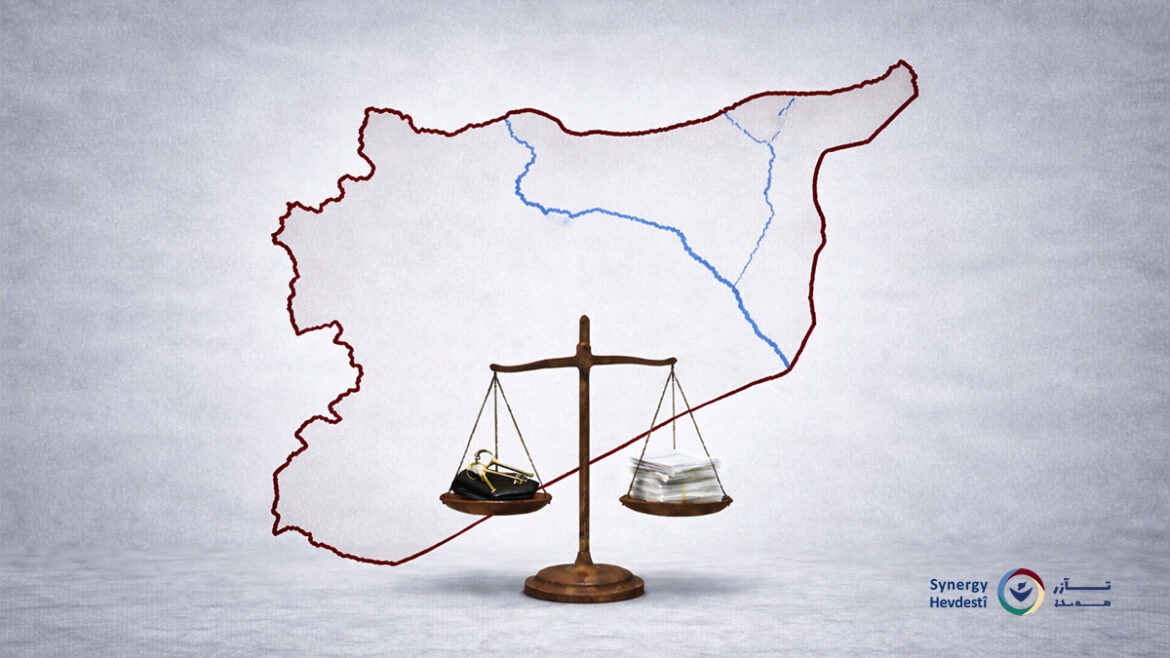
Based on these findings, the paper concludes that achieving a genuine transitional justice pathway requires a practical balance among three interconnected spheres: material measures that restore rights and prevent the long-term entrenchment of violations; truth and accountability processes capable of producing credible and non-negotiable acknowledgment; and participatory structures that ensure safety while providing victims with legitimate and effective representation.
These conclusions are translated into a set of actionable recommendations which emphasize: institutionalizing victim centrality as a governance framework rather than a symbolic slogan; developing robust security and confidentiality protocols; designing clear and transparent testimony pathways accompanied by feedback mechanisms; prioritizing the issue of the missing and forcibly disappeared; supporting hybrid accountability models grounded in international standards; and placing housing, property, return, and economic reparations at the core of reparations policies, while adopting managed decentralization with unified standards to prevent the reproduction of marginalization, particularly against women and minorities.
At its core, the paper does not seek to propose a “Perfect Blueprint” for justice, but instead advances its realistic condition: justice that victims can trust, experience in their everyday lives, and help shape and oversee—rather than being reduced to symbolic names used to legitimize pre-designed pathways.
Report Methodology:
This report employs a mixed and integrative methodology combining quantitative and qualitative tools to develop a grounded understanding of victims’ priorities, needs, and the conditions that shape their willingness and ability to engage in transitional justice processes. Rather than seeking statistically representative results, the methodology is designed to identify clear patterns and capture deeper insights rooted in victims’ everyday experiences within an ongoing conflict context.
Research tool included:
- Survey:
The study included a survey of 201 participants, comprising victims and/or their family members, from areas in North and East Syria and related displacement settings. The survey was structured to capture three interconnected dimensions:
- Participants’ general characteristics and experiences of violations;
- Their views on transitional justice priorities and the mechanisms they consider most relevant and effective;
- Their current needs, barriers to accessing services, and forms of participation they perceive as safe and feasible.
Survey findings are presented as indicative trends rather than representative statistics, reflecting the use of a convenience sample and the significant access constraints associated with an unresolved conflict. Despite these limitations, the data reveal strong and recurring patterns that offer meaningful insight into justice-related priorities within this geographic context.
- Interactive Discussion Session:
To complement and contextualize the survey findings, the report draws on an interactive discussion session focused on the concept of victim-centeredness and the distinction between meaningful participation and symbolic representation. The session brought together participants from civil society and human rights backgrounds and explored geographic and political constraints, as well as the underlying drivers of the trust gap between victims and existing justice pathways. This exchange added an interpretive layer, highlighting how disagreement, convergence, and negotiation unfold through live dialogue rather than formalized narratives.
- In-Depth Interviews
The methodology also included 15 in-depth interviews with local actors, including human rights practitioners, journalists, lawyers, and civil society activists. These interviews aimed to explore local understandings of justice, identify the conditions of safety and legitimacy that make testimony possible, assess existing accountability mechanisms, and examine proposals for hybrid approaches linking local and international justice efforts.
Interview data were analyzed using thematic analysis, focusing on recurring patterns and internal tensions, such as the desire for locally grounded processes alongside concerns about inadequate protection, while taking into account variations across social groups, displacement experiences, and positional contexts.
The analysis was based on cross-reading and triangulation across the three research tools: the findings from quantitative data, the insights articulated through collective discussion, and the depth provided by individual narratives. This integrative approach enables the report to articulate a coherent, practice-oriented understanding of what is realistically actionable, while also acknowledging the limits of available knowledge in a highly complex conflict environment, without claiming comprehensiveness or universal representation.
Introduction:
This analytical paper is part of the Justice Space Initiative and seeks to reframe the question of transitional justice in Syria from a different vantage point. Rather than approaching it as a theoretical construct or an institutional project debated within political and human rights circles, the paper starts from the everyday realities of victims themselves. What does justice mean to someone who has lost their home or land? How is justice understood by those living with the ongoing uncertainty surrounding a missing or forcibly disappeared loved one? And what value can any justice process hold if it does not translate into a tangible sense of safety and the capacity to continue living?
The report is grounded in a clear problem: public debates on transitional justice in Syria continue to be shaped by a high degree of centralization, with core policies and conceptual frameworks formulated at a distance from the social and political realities of peripheral regions. This pattern undermines the possibility of meaningful participation by victims and their representatives, and marginalizes the priorities of areas such as Northern and Eastern Syria within the “national” definition of justice, despite the scale of violations and the multiplicity of actors involved across this geography.
In this context, the risks of selective justice are compounded when accountability is narrowly framed around the violations of a single party while other abuses are ignored. This is evident, for example, in Transitional Justice Decree No. (20), which focuses exclusively on the violations of the former Syrian regime, while disregarding the reality of multi-party violations in Northern and Northeastern Syria. Such exclusion does not merely amount to overlooking well-documented facts; it effectively excludes broad segments of victims from any national pathway to redress and accountability, thereby undermining trust in the entire process from its very outset.
The findings of the Justice Space Initiative show that the impact of this political framework does not remain confined to texts or policy debates, but translates directly on the ground into a trust gap and restrictive conditions for participation. Victims do not only question the nature of the proposed mechanism, but also its degree of independence, the safety guarantees it offers, and the consistency of the standards by which it operates. As a result, there is a clear tendency toward accountability models that combine local approaches, a victim-centered framework, and a firm commitment to international standards and safeguards.
Within this context, decentralization is seen as a tool to improve access and representation rather than as a substitute for independence or consistency. When properly managed, decentralization allows justice to be responsive to local realities, without compromising oversight or enabling favoritism. It ensures that justice is not imposed from a distant center but emerges in ways that reflect the lived experiences of affected communities.
To capture these perspectives, the initiative used three complementary methods: survey, discussion session, and in-depth interviews. These tools aimed to bridge the gap between centrally designed mechanisms and the realities of victims’ lives, producing insights directly from the people most affected and translating them into actionable recommendations while ensuring protection, independence, and broad geographic and political inclusion.
The study draws on both quantitative and qualitative data:
First; 201 surveys were analyzed from victims and/or relatives of victims in Northern and Eastern Syria, including al-Hasakah, Qamishli, Raqqa, and some displacement areas and associated camps. The surveys covered demographics, the nature of violations, responsible parties, transitional justice priorities, current needs, barriers to accessing services, participation, and messages to stakeholders and policymakers. While the sample was non-representative, it reveals strong trends within this geography.
Second; A discussion session titled “Victim-Centered Approaches in Transitional Justice Processes” involved 24 participants (14 women), focusing on the distinction between meaningful participation and tokenistic representation, as well as challenges in ensuring geographic and political inclusivity for victims from Northern and Eastern Syria.
Third; 15 in-Depth interviews (including eight women) provided detailed narratives on the local understanding of justice, conditions for trust and security, limitations of existing mechanisms, and the tension between the desire for “justice close to the people” and concerns over local mechanisms lacking independence and standards.
This paper approaches justice as a social and political relationship, measured by its ability to move affected individuals from passive recipients to active partners: inclusive geographically, legitimized through representative participation, sustained by continuous listening mechanisms, and underpinned by clear recognition of harm and rights, with practical tools that rebuild trust and prevent recurrence of violations. It does not aim to propose a purely theoretical framework but seeks to provide a practical foundation for transitional justice policies and programs that are closer to the people and more sustainable.
It also forms part of an evidence-based advocacy campaign targeting multiple audiences, including victims of all genders, public activists, journalists, policymakers, and human rights practitioners, with particular attention to women and marginalized groups. The recommendations contained here serve as a basis for dialogue with stakeholders and as concise, actionable policy briefs.
Ultimately, this paper aims to clarify what victims truly want, their priorities, their needs, and the conditions under which their participation can be safe and meaningful. It also analyzes the gap between these priorities and what is typically proposed in transitional justice processes, providing practical recommendations that can be translated into policies and programs, with special sensitivity to the local context of Northern and Eastern Syria.
Justice Closer to Victims: Participation, Safety, and Confidence-Building in Transitional Justice
Discussions of transitional justice in Syria often frame it as a large institutional project, centered on bodies, committees, and legal pathways framed in highly technical language. However, findings from the Justice Space Initiative indicate that the question most pressing for victims is not “Which mechanism should be chosen?” but rather: Can this mechanism be trusted at all? In this context, trust is not an abstract ethical value; it is a fundamental condition for any justice process to function. Without it, the principle of “victim-centeredness” risks remaining a well-meaning slogan, while participation becomes superficial, selective, or even potentially harmful to those it is intended to serve.
Survey findings indicate that, for many victims, participation remains uncertain or inconsistent. A significant portion of respondents consider it insufficient, while a comparable number are unsure how to assess it. This uncertainty does not reflect neutrality; rather, it signals the absence of clear, accessible mechanisms for engagement and highlights the gap between victims and justice processes. In such conditions, participation tends to exist more as a principle than as an experience in practice.
By contrast, the findings indicate that victims’ desire to participate extends beyond simply appearing or providing testimony. It reflects a demand for meaningful roles: representation within committees, involvement in setting priorities, and engagement in monitoring and evaluation. This distinction is crucial, as it shifts victims from being mere “sources of information” to rights-holders with genuine influence over decision-making.
However, participation, as articulated by victims, is not simply granted by the formal opening of opportunities. The context in which they live remains fraught with risks: overlapping zones of control, unaddressed violations, and unpredictable consequences for giving testimony or engaging publicly.
This explains why the conditions victims set for participation are guided more by a logic of self-protection than by procedural requirements. Confidentiality comes first, followed by clarity on the process and the potential outcomes of speaking, then safety, and finally the independence of the entity receiving testimonies from conflict parties. The implicit questions are not merely “Will you listen to us?” but rather: “Who will know? What will happen to our testimony? Could it be used against us? And will this result in concrete outcomes?”
In-depth interviews provide additional nuance to this caution. Several respondents expressed a recurring concern that victims are often treated primarily as sources for documentation or media narratives, rather than as partners in designing solutions. The interviews also highlighted that existing political and rights-focused priorities tend to reinforce the marginalization of certain regions, making justice feel disconnected from victims’ daily realities. Within this context, pursuing locally grounded justice is not merely an organizational option—it represents an effort to restore meaning: justice that is proximate, understandable, and socially accountable.
However, the findings do not present decentralization as a ready-made or risk-free solution. On the contrary, discussion sessions and interviews reveal a nuanced tension: there is a clear aversion to centralization because it excludes, yet at the same time a real concern about “localization without safeguards,” which could result in weak, politicized, or nepotism-influenced justice subject to security and social pressures. Decentralization is thus redefined here not merely as a geographic question, but as one of standards, legitimacy, and protection. Proximity to victims does not automatically ensure fairness unless local processes are guided by a coherent set of standards that prevent the reproduction of violations in new forms.
The findings also indicate that representation is a central factor in confidence building. The presence of someone from a particular region on a committee does not, by itself, ensure meaningful representation. The key concern for victims relates to how representatives are selected, the transparency of their mandate, and their genuine capacity to communicate community priorities and influence decision-making. Discussion sessions highlighted the distinction between symbolic involvement and substantive participation, emphasizing that engagement should enable participants to shape issue priorities and hold processes accountable, rather than simply ratify decisions made in advance.
From another perspective, the findings reveal particular sensitivity to “dual marginalization,” especially affecting women and minority groups. When these groups are invited solely as symbols of suffering rather than as active participants in decision-making, justice risks becoming an extension of the social and political hierarchies that originally contributed to harm. Interviews clearly indicate that women’s presence can be merely formal, whereas what is required is for women’s experiences to serve as a reference in shaping protection policies, documentation efforts, and reparations—rather than simply adding a humanitarian or emotional dimension to the discourse.
In conclusion, this section presents a vision of justice grounded in victims’ perspectives and lived realities, rather than imposed hierarchically. Justice is measured by its ability to provide safety, clarity of purpose, independence of institutions, legitimacy of representation, and the transition from symbolic participation to genuine partnership that can influence both what decisions are made and how they are made.
In this context, placing victims at the center is not a supplementary element in transitional justice programs, but a core principle essential to their purpose and effectiveness. When absent, justice remains abstract and removed from daily realities; when embraced, it becomes a meaningful practice that is socially rooted, relevant, and capable of enduring.
Truth and Accountability: Uncovering the Fate of the Missing and Models of Accountability and Hybrid Mechanisms
Findings from the Justice Space initiative indicate that, for victims, truth and accountability are not understood as purely legal processes, but as integral to everyday life and essential conditions for preventing the continuation of violations. Where truth is absent and accountability is lacking, past violations remain an active and unresolved presence in the lives of individuals, families, and communities.
While determining the fate of missing persons was not ranked among the highest priorities in the survey results (29%), compared to property restitution (60%), accountability (57%), truth-seeking (51%), and compensation and reparations (43%), qualitative findings—particularly interviews and open-ended responses—demonstrate that this issue constitutes the core of what “truth” means for families of the missing. For these families, truth is inseparable from knowing the fate of their loved ones. Accordingly, this report treats the issue of missing persons as a priority within the truth pillar: an independent pathway that does not compete with demands for material redress, yet represents a minimum and non-negotiable requirement to avoid reproducing exclusion and marginalization.
- Layers of Truth in Victims’ Understandings:
The findings indicate that victims understand “truth” as a multi-layered concept. At one level, truth relates to the documentation of violations, the identification of patterns, and the attribution of responsibility. This form of truth is essential for building collective memory and preventing denial. On the other hand, a more specific and individualized form of truth emerges for families of the missing, for whom absence becomes a state of prolonged uncertainty that cannot be resolved without reliable information and regular, institutionalized communication. The issue of missing persons therefore requires more than presenting it as a humanitarian or symbolic concern; it calls for a structured, well-defined program with clear procedures, dedicated follow-up mechanisms, and direct integration with accountability processes.
The findings also highlight a concerning gap in documentation. Only 39% of respondents indicate that the violations they experienced have been formally recorded, while the others either do not know if their experiences were documented or confirm that they were not. This gap reflects not only limited access to documentation mechanisms, but also underlying fear, mistrust, and the complex security environment. In light of these concerns, truth should be understood as a gradual, iterative process that depends on secure reporting channels, clear standards, and strong safeguards against harm, rather than on broad calls for testimony alone.
- The Significance of Accountability:
As the narratives demonstrate, truth remains incomplete without accountability. Recognition of violations without corresponding consequences is perceived as fragile—a gesture that can be politically exploited or used to absorb anger without effecting real change. Many victims express that the most profound pain does not stem solely from the violations themselves, but from the persistence of impunity and from seeing individuals accused of abuses remain in positions of power or protection. In this sense, accountability becomes a moral and political declaration: that crime is unacceptable, that power does not confer immunity, and that the dignity of victims cannot be compromised in the name of “realism” or “stability.”
- Hybrid Accountability Models:
The findings also resist framing accountability through a simplified domestic–international binary. National courts are often perceived as inadequate—either lacking independence or burdened by a legacy of politicization—while purely international mechanisms, despite their symbolic significance, are frequently experienced as distant, slow, and disconnected from victims’ everyday realities. It is against this backdrop that a clear preference emerges for hybrid mechanisms, understood as an attempt to move beyond this dual impasse.
The appeal of hybrid models lies not merely in their institutional design, but in the promise they offer: closer engagement with victims and local contexts, combined with stronger guarantees of integrity and protection. This preference reflects a desire to limit selectivity, prevent any single party from monopolizing justice, and avoid its use as a tool for settling scores or consolidating power. The findings indicate that victims do not seek “international” or “national” justice in name only—they seek justice they can trust will not be turned against them in the future.
The findings also reveal a nuanced perspective on extraterritorial initiatives, such as certain European prosecutions and international documentation efforts. These pathways are viewed positively because they help partially break the cycle of impunity, create usable archives, and signal that crimes carry consequences. At the same time, they are seen as limited given that their mandates are narrow, the number of cases they can address is small, and they remain distant from the everyday realities of most victims within the country. Consequently, while these mechanisms are necessary, they are not sufficient on their own to deliver comprehensive justice.
In contrast, the findings show clear caution toward measures framed as amnesties or opaque settlements, especially when they appear designed to bypass the truth or absolve responsibility. This caution grows when such measures are not paired with explicit guarantees, the release of detainees, or accountability-driven acknowledgment. In these circumstances, justice risks being reduced to political management rather than a genuine response to harm.
- Linking Truth and Institutional Frameworks:
At the core of this theme, it is clear that truth and accountability go beyond addressing major crimes, given that they also involve confronting the systems that allowed violations to continue: the power merging with perpetrators, weak independent institutions, and the selective enforcement of rules.
This raises a more fundamental question rising from the Initiative’s findings: How can a shared, inclusive truth be established, and accountability applied fairly and consistently, in a context where narratives and power are constantly contested? While the findings do not offer a simple answer, they highlight victims’ acute awareness of, and sensitivity to, any process that appears to selectively target perpetrators or victims based on power dynamics.
In this sense, victims’ conception of justice extends beyond punishing individual perpetrators; it also entails redefining a fundamental principle: that neither people nor their rights and truths should ever be subordinated to political agendas, nor should violations be allowed to become normalized, no matter how much time passes.
Tangible Justice: Housing, Property, Return, and Economic Reparations
The findings of Justice Space Initiative offer a perspective on transitional justice that challenges the common perception of it as purely a legal matter, deferred until “After Politics.” For many victims, justice is not first experienced in a courtroom or through political rhetoric, but in a simple, daily, and often harsh question: Can I live a sustainable life? From this standpoint, issues of housing, property, and return are not secondary humanitarian or service concerns—they lie at the very heart of the relationship between victims and their rights, serving as a direct measure of the credibility of any transitional justice process.
The loss of a home or land is not merely material; it disrupts stability, erodes the sense of security, and severs family and social continuity. When returning to one’s original home becomes impossible or too risky, harm becomes permanent: no home is restored, no future can be planned, and no legal recourse is available. These issues are thus directly linked to forced displacement and the inability to return, where violations do not remain in the past but persist in the present through poverty, vulnerability, and uncertainty.
From this perspective, the findings show that issues of property, housing, and return intersect across three overlapping levels of harm. At the Legal Level, many victims lose the means to prove their rights due to missing documents, disrupted land registries, or the absence of independent institutions capable of confirming ownership. Within this context, rights are not only violated, but also at risk of disappearing entirely. Meanwhile on the Social Level, the loss of housing disrupts family structures and social support networks, heightening tensions within host communities and between local populations and displaced persons. Lastly, at the Psychological Level, housing goes beyond walls and a roof. It embodies a sense of security, preserves dignity, enables the protection of oneself and one’s family, and makes a future imaginable. When this sense is stripped away, discussions of justice remain abstract unless accompanied by at least a minimal restoration of safety.
The findings also reveal that poverty is not merely a byproduct of war but one of the most persistent forms of harm. When victims must constantly struggle to secure basic necessities, their ability to claim rights or engage in lengthy legal processes is severely constrained. In this sense, economic reparations are an essential component of transitional justice, not a substitute for it. They are neither charity nor temporary aid; they aim to restore a minimum level of choice and independence—reclaiming what was forcibly taken.
The issue of return is particularly complex. Returning to one’s original home is a natural demand, tied to memory, belonging, and dignity. Yet it is not merely an individual decision: return without guarantees may mean returning to the same fear, facing new security threats, property disputes, or social retaliation. Consequently, the concept of safe return—return accompanied by protection, recognition of past injustices, and measures preventing the permanence of displacement—is emphasized repeatedly.
The findings further reveal victims’ great sensitivity to solutions that sidestep property issues in the name of “Realism.” Ignoring property does not represent a technical settlement; it effectively legitimizes the consequences of violations and transforms force into a source of rights. From the victims’ perspective, any justice process that does not seriously address property restoration risks becoming a mechanism for managing the outcomes of injustice rather than addressing them.
At the same time, the conclusions highlight that tangible justice presents a delicate equation for transitional justice: financial compensation alone may be perceived as an attempt to buy silence if it is not accompanied by acknowledgment, responsibility, and guarantees of non-repetition. Conversely, mere symbolic recognition without addressing material losses is seen by victims as harsh and unjust. For many affected people, justice is not a choice between “grand rights” and “daily needs,” but rather the integration of both: accountability inseparable from the restoration of rights, truth inseparable from safe return, and reparations that restore dignity as the ability to live, not merely as an abstract moral value.
In conclusion, this section reframes transitional justice in tangible terms. Justice is not only about condemning perpetrators, but also about rebuilding what violations have destroyed in people’s lives. Homes, land, and livelihoods are not technical details; they form the foundation of stability. Without them, trust, participation, and meaningful transition toward a different future cannot be achieved. When these issues are delayed or excluded from justice pathways, reality itself produces new injustice every day.
Recommendations: Moving from Rhetoric to Practice in Transitional Justice
The findings of this report indicate that the central weakness in Syrian transitional justice efforts lies not in a lack of principles or technical tools, but in the failure to translate them into practices that victims recognize as credible and relevant to their lived realities. As participants consistently emphasized, justice is not defined by good intentions or political statements, but by its concrete capacity to provide safety, restore rights, prevent future violations, and meaningfully include those affected as partners in shaping decisions.
The analysis further reveals that justice processes which do not begin with victims’ priorities, do not address their concerns about selectivity and insufficient protection, or fail to connect truth-seeking with accountability and tangible forms of redress are inherently fragile and vulnerable to the loss of legitimacy and trust. Moreover, sidelining issues of housing, property, return, and economic reparation—or deferring them as secondary concerns—effectively reinforces the outcomes of violations rather than confronting and remedying them.
Against this backdrop, the recommendations outlined below are proposed as a practical and actionable framework. They aim to shift victim-centeredness from rhetoric to governance; to move truth and accountability from aspirational commitments to consistent, non-selective, standards-based processes; and to transform reparation from an abstract notion into a measurable improvement in people’s lives. These recommendations are directed at local actors, policymakers, and international partners alike, recognizing their shared responsibility in advancing a transitional justice process for Syria that is credible, inclusive, and sustainable.
First: Legitimacy Begins With Victims: From Consultation to Co-Ownership
- Adopt victim-centeredness as a governance framework, not mere rhetoric: Victim-centeredness should operate as a core governance principle, anchored in a clear participation charter that defines victims’ rights to access information, contribute input, raise objections, follow up, and participate in evaluation.
- Ensure legitimate and non-tokenistic representation: Meaningful representation requires transparent criteria for selecting victim representatives through accountable mechanisms within their own networks, with clearly defined terms, rotation, and disclosure of any conflicts of interest. The objective is to reflect victims’ genuine priorities, not to provide cosmetic legitimacy to the process.
- Establish safety and confidentiality systems prior to participation: Participation is not possible without protection. Unified confidentiality and data protection protocols must be in place, grounded in informed consent, options for anonymity, clearly defined access controls, and safe withdrawal mechanisms at all stages.
- Create verifiable participation pathways: Participation must be reflected in concrete decision-making roles within committees and monitoring bodies, supported by regular feedback mechanisms that explain how victims’ contributions were used and what changes resulted from them.
Second: Truth, Documentation, and Collective Memory
- Address documentation gaps: Develop a unified yet adaptable documentation approach suited to high-risk contexts, supported by training for local teams in safe, ethical testimony collection grounded in do no harm principles. This includes using shared definitions and consistent terminology, and building trust with victims through gradual, relationship-based engagement.
- Ensure secure and protected archiving: Establish a multi-layered evidence system that distinguishes between confidential material, controlled-access content, and public summaries, balancing the public’s right to knowledge with victims’ rights to safety and protection.
- Enable access to knowledge without exposing individuals: Produce regular analytical and statistical reports that illuminate patterns, responsibilities, and broader contexts while safeguarding sensitive data through anonymization. These outputs should be linked to collective memory initiatives that uphold dignity and respect cultural diversity.
- Guarantee meaningful access to information: Develop clear protocols for cooperation with holders of local archives, alongside standards for record preservation that prevent destruction, manipulation, or political misuse.
Third: Addressing Missing and Enforced Disappearance File
- Treat missing persons as a central, standalone priority: Address the issue of missing and forcibly disappeared persons as an independent focus within the truth-seeking process. This should be managed through a dedicated program covering case intake, verification, secure databases, and ongoing communication with families—while keeping the pathway linked to legal accountability.
- Protect families’ right to information and communication: Establish clear and consistent mechanisms for engaging families that respect their choices and privacy. Ensure they receive timely updates and access to legal and psychosocial support without being pressured to relinquish their rights or accept unclear or incomplete solutions.
- Coordinate carefully with international mechanisms: Align evidence collection and sample handling with international standards to maintain the potential for future referral, while safeguarding victims’ ownership and control over their data through explicit informed consent.
- Provide comprehensive support to families: Offer sustainable legal, psychosocial, and social services to families of the missing, including assistance with civil documentation, without undermining their right to truth, justice, or meaningful participation in accountability processes.
Fourth: Comprehensive Accountability and Preventing Selective Justice
- Affirm unified standards and inclusive accountability: Justice loses its meaning when applied selectively. Accountability must address violations committed by all parties under consistent standards, with fair trial guarantees, to prevent justice from becoming a tool for political gain or retaliation.
- Support hybrid and protected accountability mechanisms: Findings highlight the need for mechanisms that balance proximity to victims with international standards of protection and integrity. Hybrid models should maintain independence, safeguard witnesses, provide oversight, and remain sensitive to local contexts.
- Strengthen international accountability without overreliance: International prosecutions are essential for breaking cycles of impunity and building comprehensive records, but they cannot address all needs on their own. They should complement, rather than replace, accessible and protected local justice pathways.
Fifth: Tangible Redress—Housing, Property, Return, and Economic Reparations
- Prioritize housing and property in transitional justice: Housing, property, and return must be treated as fundamental elements of reparations, not secondary service issues. Sidling them risks reinforcing the consequences of displacement rather than addressing them.
- Prevent the consolidation of property-related violations: Review and suspend property and administrative measures arising from forced displacement, and block any attempt to legalize property seizures under administrative or customary pretexts.
- Establish fair and flexible property restitution mechanisms: Develop hybrid, quasi-judicial pathways that accept alternative forms of evidence when documentation is missing, balancing speed and fairness, with the involvement of independent experts and victim representatives.
- Treat economic reparation as part of justice, not a substitute: Provide graduated compensation, livelihood support, and vocational rehabilitation that restore victims’ autonomy and choice, without replacing acknowledgment, accountability, or other forms of justice.
- Link return to safety and dignity: Return must be voluntary, safe, and dignified, conditioned on the cessation of violations, the guarantee of civilian protection, and restoration of rights—not imposed simply as a geographic movement in the name of stability.
Sixth: Managed Decentralization with Unified Standards and Oversight
- Local justice and service access points: Establish local access points in cities and camps for complaints, testimony collection, and legal guidance, operating under unified protocols with independent oversight.
- Monitoring and evaluation systems: Introduce measurable performance indicators (e.g., case processing times, feedback rates, women’s participation) and publish regular reports to strengthen trust.
- Independence and integrity governance: Implement regular external audits covering procedures, data protection, and conflicts of interest to prevent favoritism, politicization, or misuse of authority.
- Multi-level coordination: Connect local centers into a national or cross-regional network with shared standards to avoid file fragmentation, duplication, or harmful repeated testimony collection.
Seveth: Gender Justice and Protection of Survivors
- Mainstream gender perspectives across all pathways: Integrate gender analysis into all programs, including gender-specific risk assessments and disaggregated indicators by sex, age, and disability, to prevent reinforcing exclusion.
- Comprehensive survivor support packages: Establish or strengthen integrated centers offering legal accompaniment, psychosocial care, medical referrals, and protection services, ensuring confidentiality and survivor autonomy.
- Guarantee meaningful women’s representation: Allocate representation quotas in committees and complaint mechanisms, ensuring women’s participation includes decision-making power and the right to objection and review.
- Combat stigma and secondary victimization: Train staff in gender-sensitive communication and prohibit practices that could reproduce harm during documentation or service provision.
Eighth: Institutional Reform and Non-Recurrence Guarantees
- Institutional vetting and integrity: Conduct integrity reviews of security, judicial, and administrative bodies connected to violations, excluding perpetrators from decision-making roles through fair and transparent procedures.
- Civilian oversight and judicial independence: Strengthen oversight over security institutions, support independent judiciary with transparent appointments, and link reforms to mandatory training in human rights and international humanitarian law.
- Reform civil registry and administrative services: Simplify procedures for civil documentation and identity verification for affected populations, ensuring files are depoliticized and access to rights is not blocked or manipulated.
- Promote a culture of rights: Integrate justice and human rights education into formal and vocational training and support community initiatives redefining dignity as an enforceable right.
Ninth: International and Regional Responsibilities, Funding, and Follow-Up
- Independent accompaniment and monitoring: Encourage international actors to support victim protection pathways and monitor adherence to standards while respecting victims’ ownership over decisions and data.
- Ensure aid neutrality and rights-based conditionality: Deliver aid without discrimination or coercion, linking support to basic protection commitments and the cessation of violations.
- Multi-year funding: Shift from short-term project cycles to longer-term programs (3–5 years), recognizing that property restitution, missing persons, and empowerment cannot be addressed through rapid, short-term interventions.
- Develop timelines and follow-up mechanisms: Establish phased action plans (short-, medium-, and long-term) with clearly defined responsibilities, overseen by a victim-led monitoring committee that produces periodic, publicly accessible progress reports.
To view the full report in PDF format, please click on this link.