
Executive Summary:
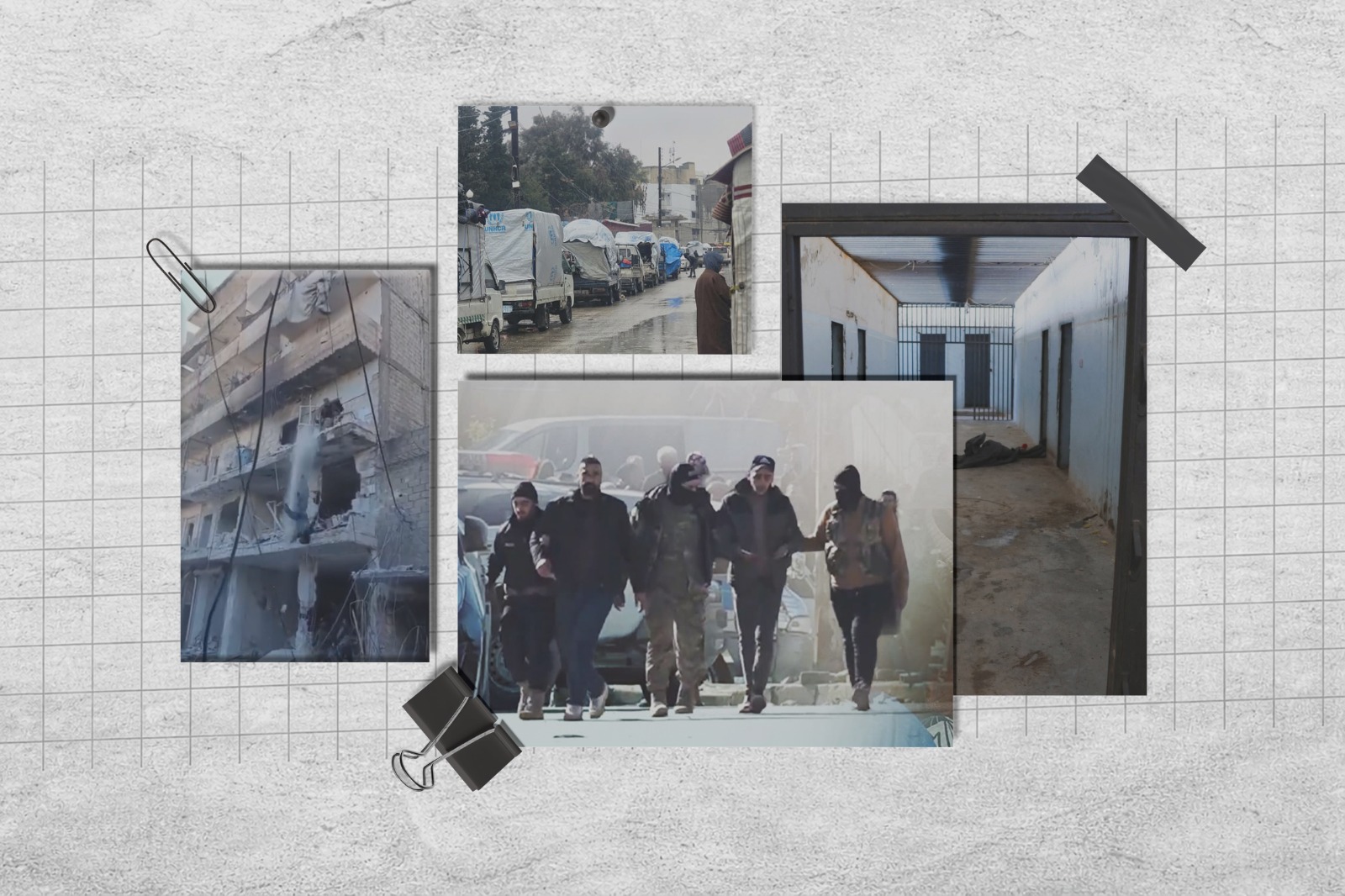
This report documents serious human rights violations committed during the military escalation of January 2026 in the city of Aleppo and across Northeastern Syria. The escalation began with military operations and shelling in Aleppo’s Sheikh Maqsoud and Ashrafiyeh neighborhoods, involving Syrian government forces and the Internal Security Forces (Asayish) affiliated with the Syrian Democratic Forces (SDF). The hostilities subsequently expanded to the areas of Dayr Hafir and Maskanah, and later to the governorates of Raqqa, Deir ez-Zor, and parts of al-Hasakah, amid successive withdrawals by the SDF and intermittent clashes between the parties.
The report examines violations attributed to all parties involved in the escalation, with particular focus on abuses documented in the aftermath of the takeover of the Sheikh Maqsoud and Ashrafiyeh neighborhoods by forces affiliated with the Syrian transitional government, as well as violations arising from security vacuums and heightened tensions in areas affected by the withdrawal of SDF.
According to verified documentation, shelling of residential neighborhoods in Sheikh Maqsoud and Ashrafiyeh killed at least 45 civilians, including women and children, and wounded more than 120 others. The attacks also caused widespread destruction to homes and civilian infrastructure, including repeated strikes on the only hospital in Sheikh Maqsoud.
The report further observes civilian casualties resulting from SDF shelling of other inhabited neighborhoods in Aleppo during the same period, underscoring that civilians were subjected to serious risks from all parties to the conflict, amid exchanges of fire in densely populated residential areas.
The report also documents the use of so-called “Warning Maps” prior to certain strikes and assesses their effectiveness in a context characterized by widespread electricity and communications outages, as well as civilians’ limited access to the technical information disseminated. The findings indicate that some attacks struck locations that had not been publicly identified as military objectives, raising serious concerns about compliance with the principles of distinction and proportionality, as well as the obligation to take precautions under International Humanitarian Law (IHL).
Following the military takeover of the two neighborhoods, the report documents patterns of degrading and humiliating treatment against civilians who were rounded up and temporarily detained, in some instances accompanied by inciting rhetoric and stigmatization based on ethnic identity. The report also records practices that violate the dignity of the deceased, including the desecration of bodies, their filming, and the widespread dissemination of such footage.
In Aleppo alone, the report documents at least 541 cases of enforced disappearance or missing persons, including 26 women, in addition to dozens of similar cases documented in other areas during periods of withdrawal and changes in control. In the vast majority of cases, no official information was made available concerning the places of detention or the fate and whereabouts of the individuals concerned.
The report also documents incidents of civilian killings in the context of the conflict, including a deliberate attack targeting a Kurdish family who were attempting to flee from Raqqa toward al-Hasakah. After being stopped by an armed group and questioned about their ethnic identity, six members of the family, including two children, were killed. It further records a drone strike targeting a Kurdish Red Crescent building in Qamishli City, as well as another strike in the Kobani countryside that killed five members of one family—three women and two children—and injured four others, including three women and one child.
The report further documents incidents of looting, pillage, and confiscation of private property affecting Kurdish families in the cities of Raqqa and Tabqa, in the absence of effective legal protection mechanisms.
From a humanitarian perspective, cross-verified data indicate that more than 160,000 persons were displaced from the Sheikh Maqsoud and Ashrafiyeh neighborhoods, in addition to a broader wave of displacement affecting over 130,000 persons across Northeastern Syria. Many Internally Displaced Persons (IDPs) sought shelter in schools and other public buildings not equipped for prolonged habitation, amid acute shortages of water, electricity, and health services, as well as widespread disruption to education.
The report further examines restrictions on access to essential services, particularly in Kobani, where the cutting or severe limitation of electricity, water, and communications, together with road closures, exacerbated shortages of food, medical supplies, and heating, despite the entry of some humanitarian convoys.
The report concludes that the recurrent patterns of shelling, public humiliation, arbitrary detention, enforced disappearance, violations affecting the dignity of deceased persons, as well as siege-like measures and restrictions on access to services, point to deeply troubling patterns that extend beyond isolated incidents. These findings underscore the urgent need for independent and transparent investigations to establish individual and command responsibility, ensure accountability, prevent impunity, and prioritize the protection of civilians and human dignity in any political process intended to be viable and sustainable.
Methodology:
This report aims to document and analyze serious violations committed in the context of the military developments in the Sheikh Maqsoud and Ashrafiyeh neighborhoods of Aleppo, and the subsequent effects extending into areas of Northeastern Syria during January 2026. The methodology combines field-based documentation with legal, humanitarian, and contextual analysis.
The report draws on data collected from 6 to 31 January, with follow-up on certain ongoing impacts where feasible. The research team conducted 20 direct interviews with eyewitnesses, survivors, family members of victims and missing persons, local activists, and humanitarian personnel. These interviews addressed incidents of shelling, detention, enforced disappearance, or disappearance of persons, displacement, restrictions on access to essential services, and the effects of these violations on individuals and local communities.
All interviews were conducted in accordance with the principles of informed consent, confidentiality, and do no harm, with due consideration for participants’ security and psychosocial contexts.
In addition, the team monitored and documented 240 video recordings and 16 audio files, which were entered into Synergy Association’s database. These materials underwent technical and contextual verification, including cross-checking dates, geographic locations, visual landmarks, and sequences of events, as well as source triangulation, to assess their credibility and, where sufficient information was available, to use them as corroborating evidence.
The report further draws on the collection and analysis of visual materials, photographs, and digital documents circulated on social media and through local media outlets, alongside data and reports issued by Syrian and international organizations. These sources were incorporated within a broader process of cross-verification.
The methodology adopts a victim- and survivor-centered approach, drawing on their experiences as a primary source for understanding the nature of the violations and their impacts. Particular attention was paid to ethical and security considerations at all stages of the research, including the protection of source identities, encryption of sensitive data, avoidance of publishing information that could expose individuals or communities to additional risks, and careful handling of testimonies from individuals affected by psychological trauma.
In analyzing the documented incidents, the report relies on the rules of International Humanitarian Law (IHR) and International Human Rights Law (IHRL), as well as relevant standards concerning the protection of civilians, the prohibition of torture and other cruel, inhuman, or degrading treatment, the prevention of arbitrary detention and enforced disappearance, and the protection of property and essential services.
The report also considers the political, military, and social contexts in which the events occurred, in order to assess them as potential patterns of practice rather than as isolated incidents.
The report acknowledges objective limitations that affected the documentation process, including restricted physical access to certain areas, security risks, the reluctance of some witnesses to provide public testimony, and intermittent communications outages. These limitations were addressed by diversifying information sources and continuously updating the data as new information became available.
This methodology provides the basis for an analysis grounded in the best available information and aims to present a balanced assessment of the events and their humanitarian and legal implications, in support of the protection of civilians, the promotion of accountability, and the establishment of an evidence base that can inform pathways to justice and redress.
First: Targeting of Civilians during Military Operations in Northeastern Syria
- Shelling of “Kharab Ashk” Village – Kobani Countryside | 26 Jan 2026
Mustafa Sheikh Bozan, a resident of Kharab Ashk (Kharab al-‘Ashik) Village in the Kobani countryside, reported that an airstrike struck a civilian home on the evening of 26 January 2026. He stated that the area had been free of any clashes or gunfire prior to the attack.
According to his testimony to Synergy Association, Mustafa lives with his family outside the village residential area. However, one of his relatives residing inside the village —his son’s father-in-law—asked him to come to their home out of fear of a potential attack. Mustafa moved there with his family a few hours before the attack. The family split between two houses: his family stayed at the relative’s home, while he went to another nearby house.
Around 11:20–11:30 p.m., a sudden explosion shattered nearby windows, without prior warning or fighting. When Mustafa rushed to the house where his family was staying, he found it partially destroyed. His 19-year-old daughter, Nessrin, was trapped under the rubble, calling for help: “Get me out of here… I need a drop of water, I’m suffocating.”
He reported that shelling continued during rescue attempts, using what he described as “various types of weapons,” forcing the family to take shelter in a bathroom before fleeing to a nearby abandoned house. Ongoing bombardment and drones overhead prevented access to the injured for several hours. Mustafa and his family were able to free Nessrin only the following morning using rudimentary tools. She was later taken to Kobani Hospital, while four other bodies remained under the rubble for two days.
The attack killed five members of the same family: Fatima Haj Mahmoud (60 years old), Jamila Sheikh Nabi (65), Nafash Sheikh Bozan (23), and two children, Solin and Kaniwar Sheikh Bozan (aged four and three). Five others sustained varying injuries: Sherehan Haj Mahmoud (32), Fatima Haj Mahmoud (20), Nesrin Sheikh Bozan (19), and Masoud Sheikh Bozan (6).
The witness noted that the body of one of the victims, Fatima Haj Mahmoud, was found several meters away from the house, suggesting the use of heavy munitions that had thrown her body outside the structure.
he strike occurred following a ceasefire announcement between the Syrian Transitional Government and the Syrian Democratic Forces (SDF). The SDF subsequently issued a statement accusing government forces of violating the ceasefire, particularly around Kobani, including Kharab Ashk and Jalabiya.
Available information indicates that the strike targeted a civilian gathering, with no active hostilities or visible military objectives nearby. This raises serious concerns of violations of the principle of distinction, the prohibition on targeting civilians, and the obligation to take feasible precautions. The continuation of shelling during rescue efforts, which prevented safe access to the wounded, may constitute an additional breach of the duty to protect the injured and ensure humanitarian relief under IHL.
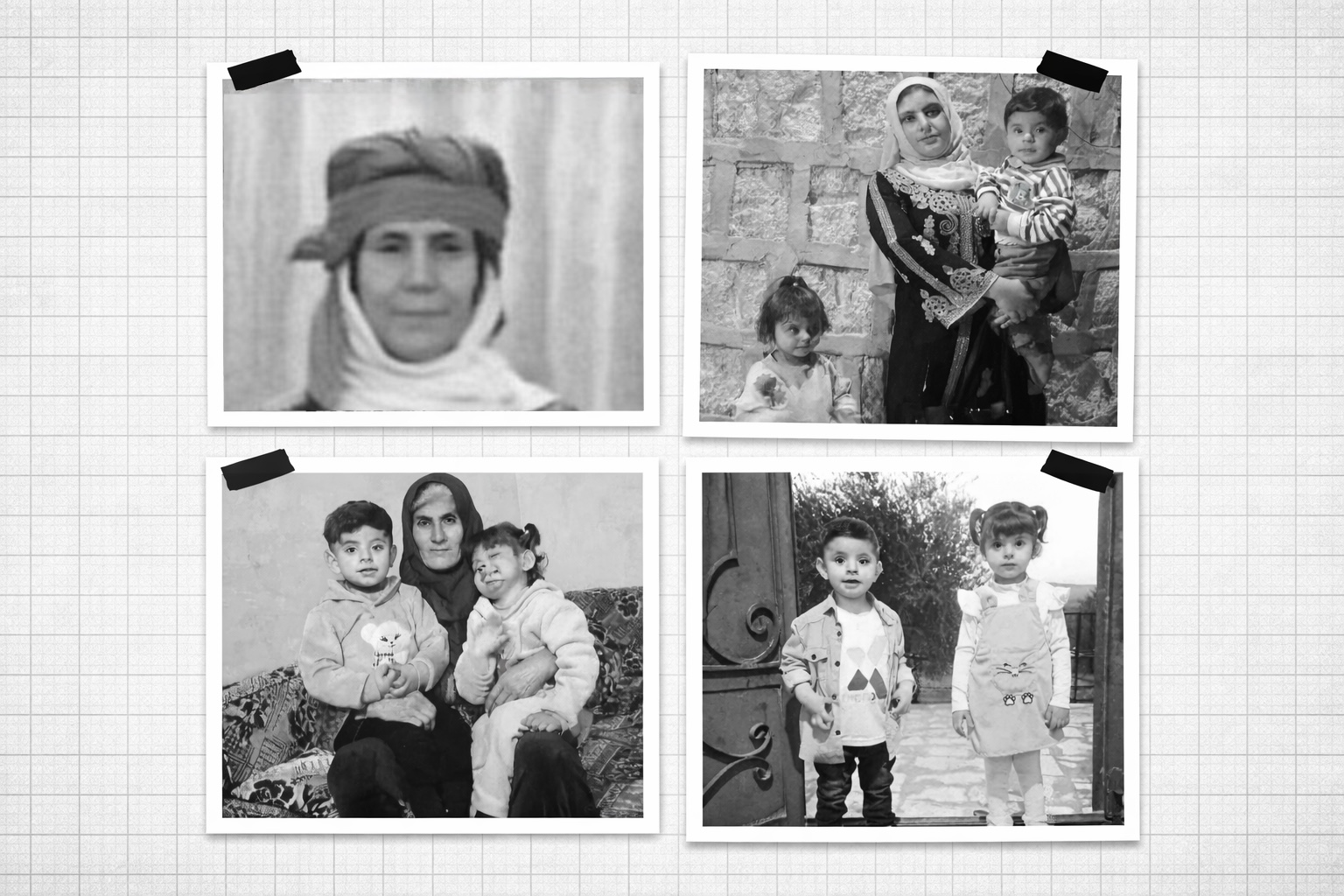
Photos of the victims: Fatima Haj Mahmoud (60 years old), Jamila Sheikh Nabi (65), Nafash Sheikh Bozan (23), and two children, Solin and Kaniwar Sheikh Bozan (4 and 3 years old). Source: the victims’ family.
Second: Killing on the Basis of Ethnic Identity
- Targeting of a Kurdish Family during Displacement | 18 Jan 2026
During the preparation of this report, a deliberate attack targeting a Kurdish family was verified. The incident occurred on 18 January 2026, as the family attempted to flee from Raqqa to al-Hasakah governorate. Six people were killed, including a woman and two young girls, and six others were injured, among them a woman and five children.
The documentation relies on verified visual and audio materials preserved in Synergy Association’s database, along with an interview with a local activist who maintained direct contact with one of the survivors while following up on the incident.
According to a survivor, a twelve-member family traveling in a civilian Kia pickup truck was stopped by an armed group near Abu Khashab. The gunmen questioned them about their place of origin and ethnic identity. When the family said they were Kurdish and not affiliated with any political party, one of the gunmen reportedly ordered their execution.
The victims who were killed: Mohammad Ismail Saleh (50 years old), Sara Shahin Saleh (49), Youssef Saleh (20), Layla Mohammad Saleh (17), Evin Mohammad Saleh (10), and Mahmoud Ahmad Saleh (26). The six injured survivors are: Sheerin Mohammad Saleh (25), Ghazal Mohammad Saleh (16), Ibrahim Saleh (13), Shadi Saleh (6), Lavand Saleh (two and a half years old), and Ibrahim Saleh (4). All sustained gunshot wounds while attempting to flee.
Verified visual materials present that the victims sustained concentrated gunshot wounds to the upper body, particularly the head, indicating deliberate killings at close range.
Testimonies also indicate violations affecting the dignity of the deceased following the killings. One video shows an eye being gouged from one of the victims. The bodies were left at the scene, while the wounded were moved and later abandoned in a desert area near Deir ez-Zor, until a local family provided assistance. The injured did not receive adequate medical care in Deir ez-Zor and were later transferred to Raqqa. The family also reported that they have not received clear information about the fate of the victims’ bodies.
This incident provides clear indications of an extrajudicial killing of civilians in a context that appears to be motivated by ethnic discrimination, constituting a grave violation of the right to life and potentially amounting to a war crime. The shooting of children, the abuse of the bodies of the deceased, and the abandonment of the wounded without medical care represent additional breaches of IHL. These acts warrant independent investigations to identify the perpetrators, establish chains of command and individual responsibility, ensure accountability, and provide reparations to the victims and their families.
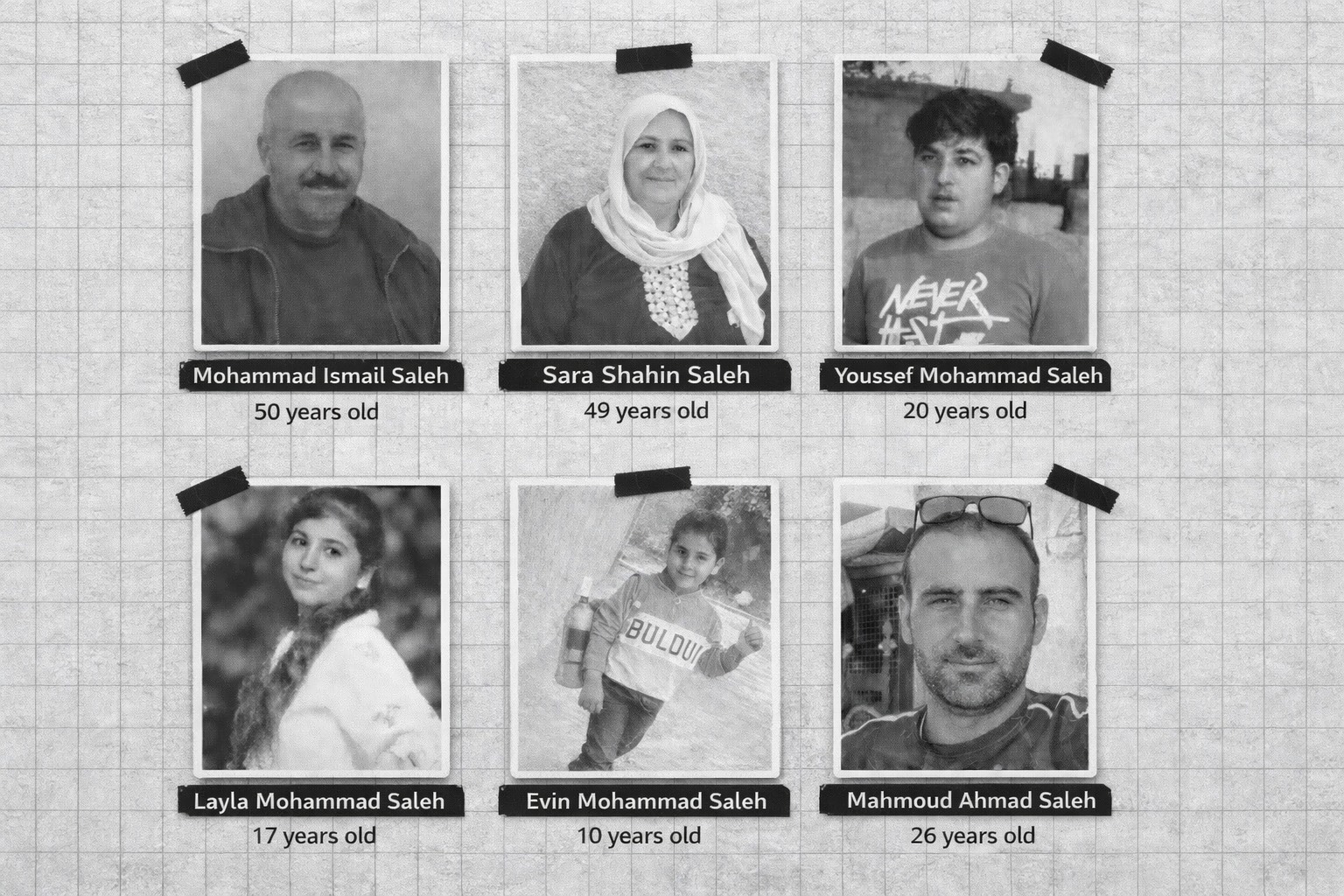
Photos of the victims who lost their lives while the family was attempting to flee from Raqqa toward al-Hasakah on 18 January 2026. Source: the victims’ family.
Third: Violations of the Dignity of the Deceased and Abuse of Bodies During Military Occupation
Synergy Association documented a series of videos showing acts of abuse and humiliation of bodies of individuals killed during military operations or following territorial takeovers in Raqqa governorate and the Sheikh Maqsoud and Ashrafiyeh neighborhoods of Aleppo. A number of these materials underwent technical and contextual verification, confirming the authenticity of several recordings with respect to time and location, while others remain under analysis and cross-referencing.
Some of the footage shows bodies lying on the ground, including both individuals wearing military attire and others in civilian clothing. Several bodies display signs of burning or severe mutilation, including the amputation of the left ear of one of the deceased. One video was filmed at the southern entrance to Raqqa, at a location locally known as “al-Maqas.” Available evidence suggests that the deceased fighters seen in the footage were likely affiliated with the Syrian Democratic Forces (SDF).
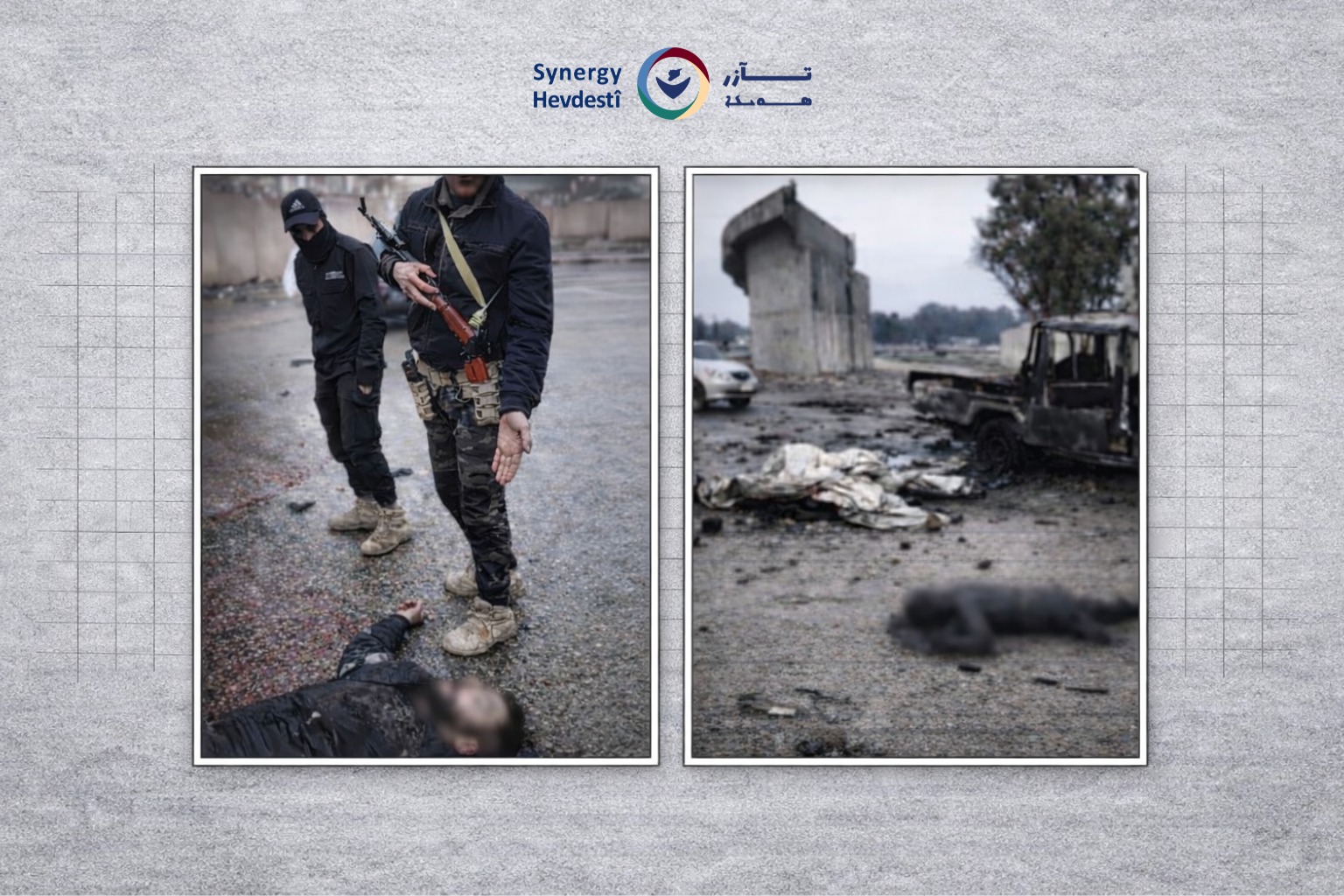
Screenshots from a video recorded on 18 January 2026 at the southern entrance of Raqqa show the bodies of several victims, both in military and civilian attire. One body, visible on the left, shows signs of ear amputation. The images were technically verified and only enhanced for quality using AI tools, without altering the original content.
Other videos depict armed individuals trampling on bodies while shouting degrading and inciteful insults such as “dogs” and “pigs,” alongside verbal threats referencing the killing of victims with knives.
In one recording, the person filming is heard saying, “Slaughtered, slaughtered with knives, the hevalat,” using the Kurdish term hevalat (“comrades”) to refer to SDF members. Additional footage shows further mutilation of bodies, either caused by the type of weapons used or by close-range gunfire after death.
In a video dated 10 January 2026, following the takeover of Sheikh Maqsoud, the body of a Kurdish female fighter is shown being thrown from the roof of a building amid chants of religious slogans. The footage also shows another body, wearing a military vest, being dragged down the stairs of a residential building, as well as scenes of detainees being publicly humiliated during their arrest.
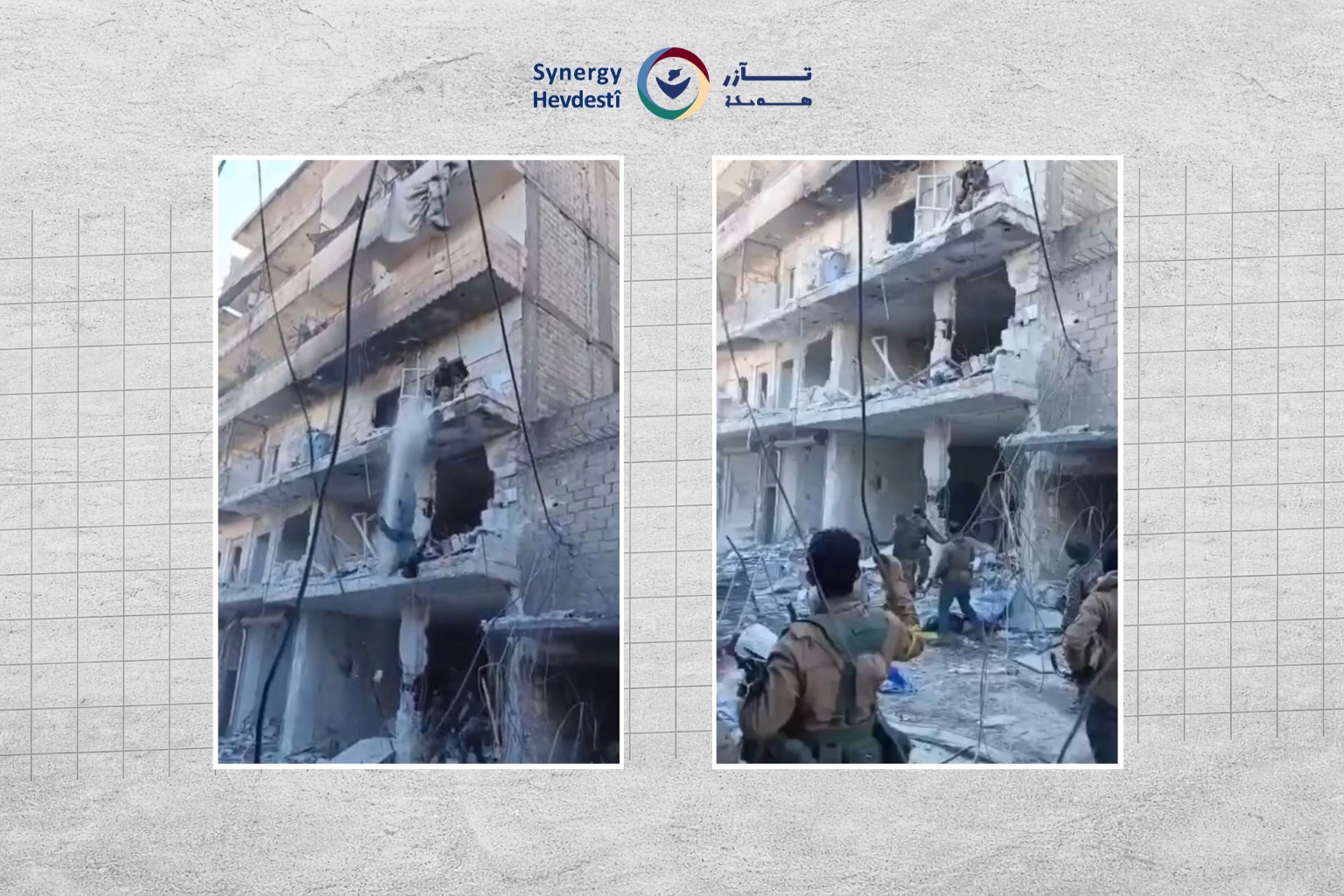
Screenshots from the referenced video showing the throwing of a Kurdish female fighter’s body in Aleppo.
Synergy also documented another video showing the bodies of five individuals bearing apparent gunshot wounds, with some of their hands bound behind their backs. This strongly suggests that the victims were in a position that severely limited their ability to resist at the moment they were shot, raising serious concerns of extrajudicial killing or summary execution.
The reporting team also reviewed two widely circulated videos on social media documenting the killing of 21 individuals in rural Kobani. One video, filmed at night, shows acts of mutilation of the bodies accompanied by threatening statements in Kurdish. While the second, recorded in daylight, shows the bodies being counted, confirming the same number of victims. Visual and spatial analysis confirms consistency between the number of victims and the geographical features visible in both recordings.
On 24 January 2026, the Syrian Democratic Forces (SDF) issued an official statement through their media center acknowledging the authenticity of the videos. The SDF reported that the incident was filmed in Kharous Village, south of Kobani, showing one of its members recording himself next to the bodies. The SDF described the act as an individual offense, announced the member’s dismissal, and referred the case to its military court.
While it has not been possible to precisely geolocate all of the documented videos, the available visual and audio indicators, as well as the broader context of their dissemination, constitute credible grounds warranting independent investigation. Since the start of the escalation, Synergy has identified more than 200 video recordings containing preliminary indicators of various forms of violations. Some of these materials have been verified in terms of time and place, while others remain under detailed analysis.
These practices—including the public abuse and desecration of bodies, their filming, and the dissemination of such content—constitute violations of the fundamental rules of IHL, which require respect for the dead and strictly prohibit mutilation or degrading treatment. The presence of victims with their hands bound further indicates a high likelihood of extrajudicial killings or summary executions, among the most serious violations that trigger individual criminal responsibility.
The impact of these acts extends beyond the immediate victims, affecting the wider community as a form of collective intimidation that reinforces a climate of impunity and undermines social cohesion. Independent and effective investigations are urgently needed to establish both individual and command responsibility, ensure accountability, and implement concrete measures to prevent the recurrence of such practices while upholding minimum humanitarian standards at all times.
Fourth: Arbitrary Detention and Enforced Disappearance Patterns
The report documents a widespread pattern of arbitrary detention and cases of enforced disappearance that began following the military takeover of the Sheikh Maqsoud and Ashrafiyeh neighborhoods in Aleppo. This pattern later extended to other areas of Northeastern Syria, coinciding with successive withdrawals by the SDF and advances by forces affiliated with the Syrian government.
As of the date of this report, at least 541 cases of missing persons or enforced disappearances were under verification in Aleppo alone, including 26 women. Dozens of additional cases have been documented in the governorates of Raqqa, Deir ez-Zor, and al-Hasakah. These incidents are characterized by a near-total lack of official information regarding the detainees’ whereabouts or their legal status.
The Missing Persons’ Families Platform in North and East Syria (MPFP-NES) issued a public statement calling for an immediate cessation of arbitrary arrests in Kurdish neighborhoods of Aleppo. The statement also demanded full disclosure of the names and locations of the detainees and guaranteed their right to communicate with their families and legal counsel.
According to collected testimonies, arrests were most often carried out during search operations, at checkpoints, or after civilians were gathered at designated locations following the entry of armed forces into residential neighborhoods. In most cases, detainees were not informed of the reasons for their arrest, no judicial warrants were presented, and families received no official notification.
In several cases where individuals were later released, former detainees reported being subjected to degrading treatment and held in undisclosed locations, deprived of contact with their families or any legal safeguards. The fate and whereabouts of a significant number of missing persons remain unknown at the time of this report’s publication.
The deprivation of liberty without a clear legal basis, the failure to inform detainees of the grounds for their arrest, and the denial of contact with families or legal counsel constitute arbitrary detention under IHRL. When these practices are accompanied by the concealment of a person’s fate or whereabouts and the effective removal of legal protection, they amount to enforced disappearance—a grave, composite violation that affects both the direct victims and their relatives.
The scale, repetition, and geographic spread of these violations—closely linked to shifts in military control—indicate a systematic pattern rather than isolated incidents. These findings underscore the urgent need for independent and effective investigations to establish individual and command responsibility, secure the release of those arbitrarily detained, clarify the fate of missing persons, and ensure access to remedies and reparations for victims and their families.
Fifth: Public Humiliation and Degrading Treatment Amid the Military Advance in Sheikh Maqsoud and Ashrafiyeh
Documented materials covering the period from 6 to 10 January 2026, following the entry of Syrian government–affiliated forces into the Sheikh Maqsoud and Ashrafiyeh, demonstrate a recurring pattern of degrading treatment and public humiliation against civilians who were rounded up and subjected to temporary detention. In several instances, such practices were accompanied by direct threats, verbal abuse, and inciting rhetoric grounded in ethnic identity.
Verified video recordings show civilians—among them women—who were rounded up and detained in collectively humiliating conditions, subjected to direct insults and threats that undermined their human dignity. In one such recording, dozens of civilians are seen being held together while the individual filming moves among them, uttering inflammatory and demeaning statements. These included phrases such as: “These are captives, the pigs,” “Praise be to God who humiliated them and granted victory to His servant,” “These are the federalism projects,” “These pigs, these atheists,” and “Qandil dogs.” This rhetoric was accompanied by explicit threats and vows to punish the detainees outside any legal framework.
Verified testimonies and video materials document a recurring on-the-ground pattern in which civilians were gathered at designated points, subjected to temporary detention or forcible transfer without legal basis or family notification, and subsequently exposed to public humiliation. These acts frequently took place in settings conducive to filming and dissemination, and involved insults and stigmatizing language that reduced victims to collective identities linked to blame, hostility, or punishment.
Several recordings document the use of demeaning and inciting language in confrontational contexts that undermine human dignity and produce what can be characterized as “Symbolic Punishment.” In this context, the objective does not appear to be punishing a specific individual, but rather spreading fear and eroding social trust within the local community through collective degradation.
The report further highlights a concerning pattern whereby field-level interventions in several cases prioritized the prevention of filming or the confiscation of mobile phones rather than on halting the violations themselves or holding perpetrators accountable, thereby reinforcing an environment conducive to impunity.
The documented practices, including public humiliation, threats, and identity-based stigmatization, amount to violations of the absolute prohibition of cruel, inhuman, or degrading treatment under International Humanitarian Law (IHL) and International Human Rights Law (IHRL), and therefore necessitate independent investigations and effective accountability mechanisms to ensure victim redress and non-recurrence.
Sixth: Forced Displacement and Restrictions on Access to Essential Services
The military escalation in Aleppo and across areas of Northeast Syria in January 2026 led to widespread displacement, occurring amid direct shelling, security violations, restricted access to essential services, and the absence of conditions necessary to ensure safe and voluntary return.
Corroborated data indicate that over 160,000 people were displaced from the Sheikh Maqsoud and Ashrafiyeh neighborhoods to other areas of Aleppo and to Afrin City, in addition to the forced displacement of at least 292 families toward Northeast Syria.
In Northeast Syria, the report documented a rapid wave of displacement affecting more than 130,000 people, the majority concentrated in the cities of Qamishli/Qamishlo and al-Malikiyah/Dêrik. Families sought shelter in schools and public buildings not equipped for habitation, facing severe overcrowding and acute shortages of water, electricity, and healthcare services, alongside the disruption of educational activities.
Although some residents subsequently returned, dozens of families remain unable to return due to damage to their homes or persistent security concerns. Thousands of additional families continue to reside in collective shelters in al-Hasakah Governorate.
Alongside the displacement, severe restrictions were imposed on access to essential services, particularly in Kobani. These included prolonged interruptions or limitations to electricity, water, and telecommunications, as well as road closures, collectively exacerbating shortages of food, medicine, heating, and healthcare services. Despite the arrival of some humanitarian convoys, the humanitarian situation remains extremely dire.
The use of schools and public buildings as temporary shelters has placed children, women, and older persons at increased health risk, due to limited sanitation facilities, lack of privacy, and insufficient capacity to provide medical care and psychosocial support.
The cutting off or restriction of access to water, electricity, and communications, as well as the closure of roads resulting in widespread deprivation of food, medicine, and healthcare, cannot be justified as neutral security measures when their foreseeable and actual effects inflict serious harm on civilians. Such practices may amount to collective punishment or to using civilian suffering as a means of coercion.
The report underscores that the protection of displaced persons, ensuring their voluntary, safe, and dignified return, and lifting restrictions on access to essential services constitute binding legal obligations for the parties in control, and must not be made conditional on political or military considerations.
Seventh: Ineffective Warnings and the Shelling of Residential Neighborhoods
In the context of military operations in the Sheikh Maqsoud and Ashrafiyeh neighborhoods of Aleppo, forces affiliated with the Syrian government employed what were referred to as “warning maps” prior to carrying out certain strikes, publishing digital geographic coordinates of areas claimed to be military targets.
This measure was presented as an advance warning to civilians. However, field evidence indicates that these maps were neither comprehensible nor practically usable by residents, particularly in light of widespread disruptions to electricity, internet, and telecommunications services in the targeted neighborhoods. Furthermore, the published maps indicated broad targeting zones encompassing multiple residential buildings, thereby effectively placing large numbers of civilians at risk.
The dissemination of complex digital coordinates presupposes access to technical tools and specialized knowledge to interpret maps and correlate them with the surrounding physical environment—conditions unavailable to civilians. Consequently, residents were forced to make life-or-death decisions within minutes, under active bombardment, amid collective panic, and in the presence of children, elderly persons, and the sick.
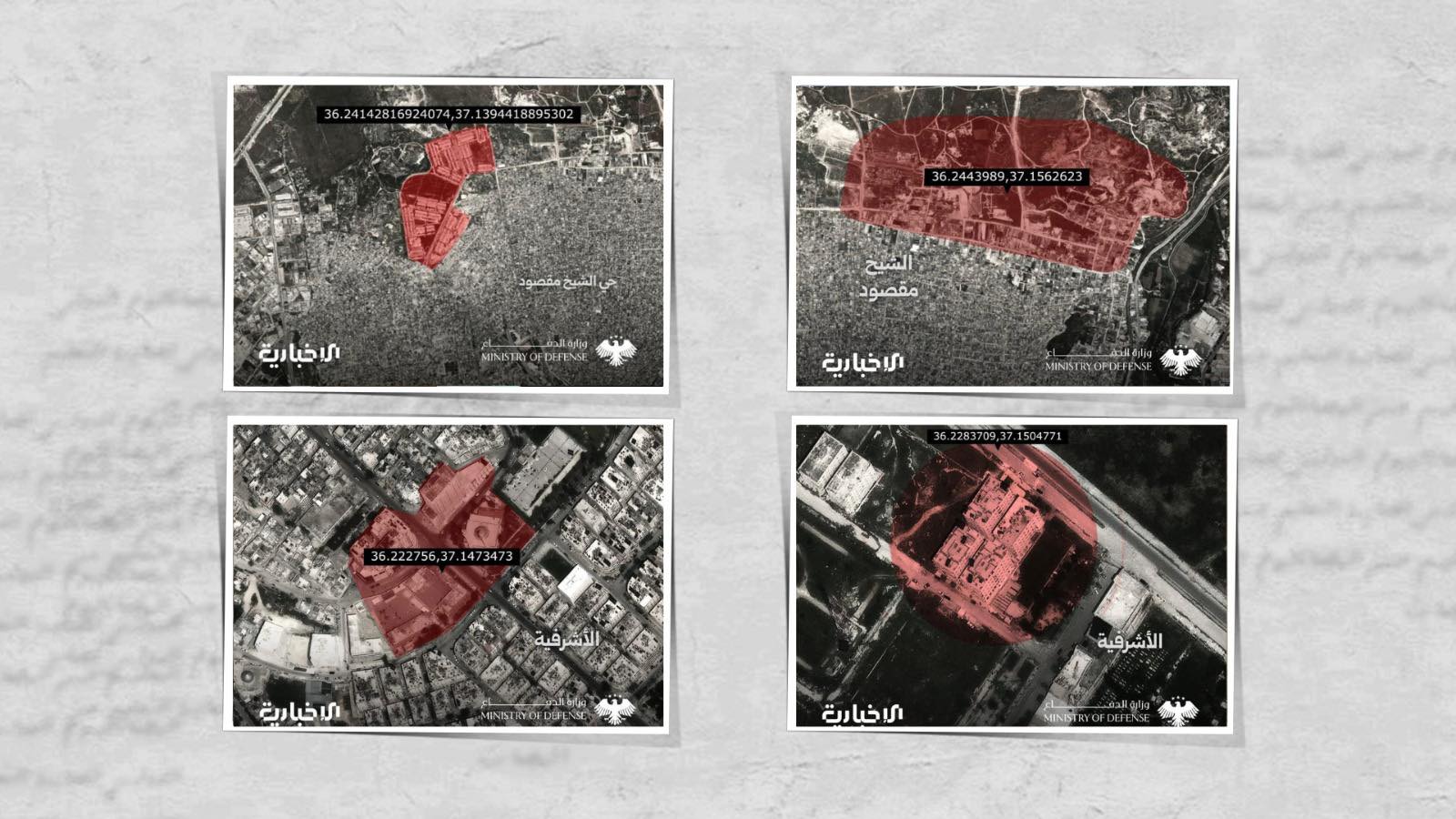
Images of some of the locations identified in the “warning maps” published by Syrian official media during military operations in Aleppo’s Sheikh Maqsoud and Ashrafiyeh neighborhoods between 6 and 10 January 2026.
Documented incidents indicate that the shelling struck populated areas, resulting in the deaths of at least 45 civilians, including women and children, while injuring more than 120 others, in addition to causing extensive damage to homes and civilian and medical facilities. In some locations, shelling reportedly continued during attempts to evacuate and provide medical assistance to the wounded, further exacerbating civilian casualties.
During the same period, the report also observed civilian casualties resulting from shelling by the SDF in other residential areas of Aleppo. This underscores that civilians were exposed to harm from multiple parties to the conflict, amid exchanges of attacks within densely populated urban areas.
Under Article 57 of Additional Protocol I to the Geneva Conventions, ‘’the duty to warn’’ requires that warnings be effective, clear, and practicable, and accompanied by realistic measures that enable civilians to protect themselves. In the present case, the documented actions do not meet the threshold of an effective warning. Rather, they appear to shift the burden of civilian protection from the attacking party onto civilians themselves, in direct contradiction to the core obligation to take all feasible precautions during an attack.
Depending on the circumstances of each incident, this pattern may amount to war crimes warranting individual criminal accountability, particularly where there is evidence of prior knowledge of the civilian character of the targeted areas.
Legal Responsibility:
The totality of documented facts in this report points to a recurrent pattern of grave violations of IHL and IHRL, committed in the context of the armed conflict during January 2026 in Aleppo and areas of Northeast Syria. These violations include attacks affecting civilians and civilian objects; the use of ineffective warnings in densely populated areas; arbitrary arrest and enforced disappearance; cruel, degrading, and inhuman treatment, including public humiliation based on identity; violations of the sanctity of the dead; looting, pillage, and confiscation of property; forced displacement; and restrictions on access to essential services that caused widespread harm to the civilian population.
In their respective contexts, these acts raise serious concerns regarding violations of distinction and proportionality, the obligation to take feasible precautions in attack, the prohibition of indiscriminate attacks, and protections owed to persons hors de combat, including bans on extrajudicial killing, torture, and cruel or degrading treatment, as well as duties to respect the dead and protect the wounded. The widespread practice of detention without legal basis, combined with withholding information on detainees’ whereabouts, reflects a pattern of arbitrary detention and may amount to enforced disappearance, affecting both victims and their families.
The documented incidents of large-scale displacement and the restriction of water, electricity, communications, and access routes, when considered in light of their foreseeable and actual impact on civilians, suggest the instrumentalization of humanitarian suffering as a means of pressure. Such conduct may amount to collective punishment or forcible transfer of the civilian population. Likewise, killings carried out on the basis of ethnic identity, if shown to be connected to the armed conflict and an underlying pattern of targeting, constitute grave violations of the right to life and may rise to the level of war crimes.
Legal responsibility extends beyond direct perpetrators to military and security commanders who knew, or should have known, of such violations and failed to prevent them or ensure accountability. It also applies to authorities exercising effective control, including their duty to regulate affiliated forces, prevent incitement, conduct prompt and effective investigations, provide reparations, and take measures to prevent recurrence.
In light of the recurrence of these violations across time and location, the report concludes that these patterns reflect a systemic failure to uphold the rules designed to protect civilians. This failure underscores the urgent need for independent and transparent investigations to establish individual and command responsibility, ensure accountability, clarify the fate of the missing, secure the release of those arbitrarily detained, and place the protection of civilians and human dignity at the center of any future political or security arrangements.
Recommendations:
I. To all armed actors, without exception
- Ensure the sustainability of the ceasefire and prevent any military operations that may threaten civilians, strictly adhere to the principles of distinction and proportionality, take all necessary precautions, and prohibit strikes in the vicinity of medical facilities, shelters, and schools.
- Enforce an absolute ban on extrajudicial killings, torture, degrading treatment, and mutilation of bodies. Issue written operational orders criminalizing these acts and ensure public accountability for violations.
- Immediately halt arbitrary arrests and establish a publicly accessible central registry of detainees, including names, detention locations, and dates of arrest, while guaranteeing communication with families and legal counsels.
- Promptly disclose the fate of all missing persons, ensuring that such information is not influenced by political or military considerations.
II. To territorial authorities and detention facilities
- Grant immediate access to independent and impartial actors to visit detention sites and verify the physical and legal well-being of detainees.
- Suspend any personnel credibly suspected of involvement in serious violations from sensitive field duties until investigations are concluded.
- Immediately halt looting, confiscation of property, and establish accessible complaint and compensation mechanisms, guaranteeing restitution or redress.
III. Regarding displacement and essential services
- Lift restrictions on water, electricity, communications, and roads, and prohibit using essential services as tools of pressure or punishment.
- Establish safe, verifiable humanitarian corridors under UN supervision, and facilitate the regular passage of aid convoys.
- Protect shelters, prevent the militarization of schools and public buildings, and ensure minimum standards of dignity, including access to water, sanitation, heating, healthcare, and emergency education.
IV. To the international community and guarantor bodies
- Establish an independent and effective mechanism to monitor ceasefires, including field verification and regular public reporting on violations, linking any subsequent security arrangements to tangible guarantees for civilian protection.
- Support and extend the mandate of the Independent International Commission of Inquiry on Syria, ensuring access to affected areas and enabling continued documentation of violations and accountability for patterns of responsibility.
- Strengthen cooperation with neutral and independent mechanisms for evidence collection, preservation, and analysis, facilitating judicial referrals wherever possible, including through universal jurisdiction.
- Support the work of the Independent Institution on Missing Persons in Syria (IIMP) by cooperating in efforts to determine the fate and whereabouts of missing persons and by ensuring sustained, regular communication with their families.
- Condition any political or financial support on measurable human rights standards, including the release of arbitrarily detained persons, disclosure of the fate of missing persons, cessation of incitement, and unhindered humanitarian access.
- Provide special protection for human rights defenders, journalists, and witnesses, and establish safe reporting channels.
V. Regarding justice, reparations, and guarantees of non-repetition
- Adopt a multi-level reparations plan encompassing compensation, medical and psychological rehabilitation, legal support for families, and the restoration of essential services as a priority.
- Implement mandatory training on civilian protection and rules of engagement for all forces.
- Prevent rights violators from holding command positions through independent vetting mechanisms.
- Ensure genuine participation of local populations in any security or administrative arrangements affecting their lives and rights.
To view the full report in PDF format, please click on this link.