
Friday, 23 January 2026
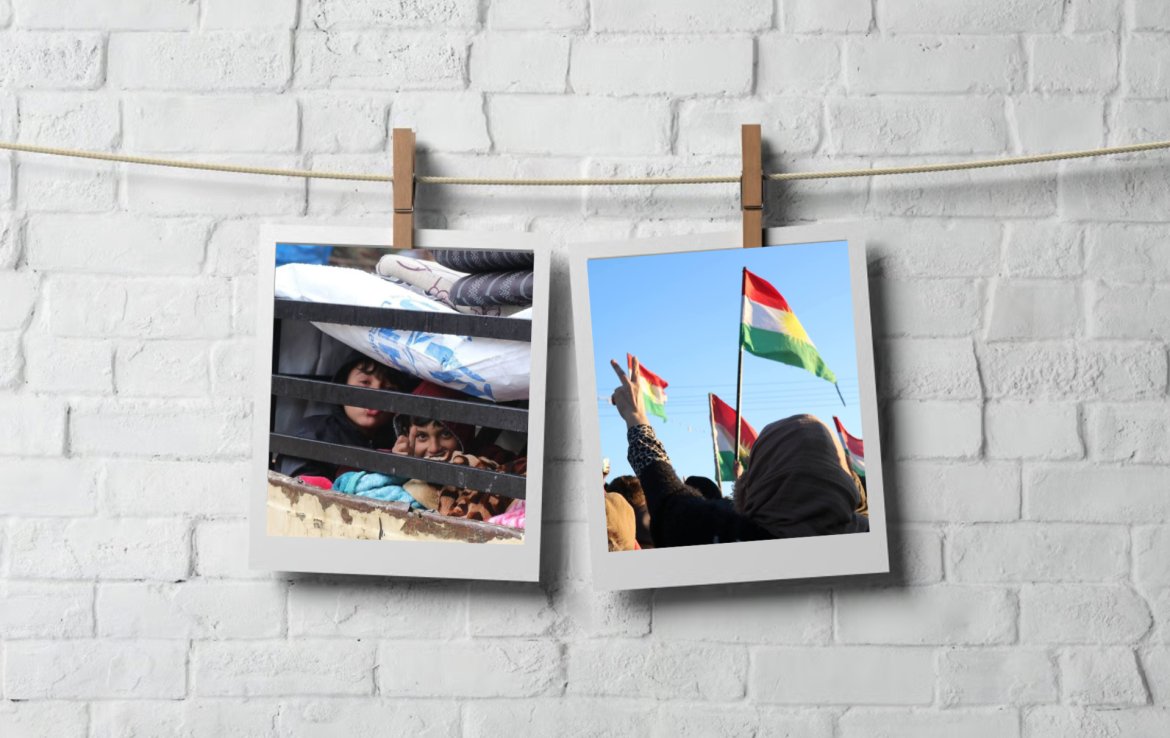
Northeast Syria is experiencing a rapidly escalating and deeply alarming situation, marked by ongoing military confrontations and their severe humanitarian and security consequences. These developments have triggered large-scale displacement and serious human rights violations. Within this context, residents of al-Hasakah and Kobani are expressing widespread fear and rejection of the potential deployment of government forces into their areas, amid the absence of any credible guarantees for civilian protection.
Profound Fears and Deeply Rooted Distrust:
Fear has become a daily reality for many residents, shaped by a long history of abuses whose effects remain deeply ingrained in collective memory. This has resulted in a deep and enduring distrust, grounded in well-documented experiences in Afrin and Ras al-Ayn/Serê Kaniyê, as well as abuses committed by armed factions later incorporated into the Ministry of Defense of the Syrian Transitional Government. These concerns are further reinforced by violations reported in the coastal regions and in as-Suwayda, followed by abuses recorded in the Sheikh Maqsoud and Ashrafieh neighborhoods of Aleppo. Taken together, these experiences are now deepening fear and uncertainty across Northeast Syria.
These realities underscore that trust cannot only be restored through rhetoric. It requires also time, accountability, and concrete measures that ensure the protection of rights without discrimination. Any approach to addressing Kurdish national rights—including provisions referenced in Presidential Decree No. 13 of 2026—must be grounded in genuine dialogue with those directly concerned, aligned with their aspirations, and translated into binding legal and constitutional safeguards. Without such steps, fear will persist and the gap of distrust will continue to widen.
A Fragile Ceasefire and Deep Concerns Over Its Failure to Protect Civilians:
These concerns are unfolding under a ceasefire currently in effect. However, developments on the ground and accumulating indicators raise serious doubts about the durability of this agreement. In the absence of clear, enforceable mechanisms to protect civilians, the ceasefire remains fragile and ill-equipped to prevent renewed violence or provide meaningful security for the population.
Security risks are further compounded by increasing reports of the escape of dozens of ISIS detainees, particularly amid military operations in and around al-Hasakah. This raises grave concerns about potential security breakdowns, renewed attacks on civilians, and heightened risks for local communities—especially religious and ethnic minorities.
Serious Violations Against Civilians:
Verified information indicates serious violations against civilians during military operations, committed by multiple parties, both in the Sheikh Maqsoud and Ashrafieh neighborhoods of Aleppo and across areas of Northeast Syria. These violations include public humiliation, threats, arbitrary detention, enforced disappearance, and degrading treatment, as documented through witness testimonies and verified video evidence. In addition, reports indicate looting and confiscation of property belonging to Kurdish residents in the cities of Tabqa and Raqqa.
These findings highlight the urgent need for independent, impartial, and transparent investigative mechanisms capable of establishing the facts, identifying those responsible in line with international standards, safeguarding victims’ rights, ensuring accountability, and preventing impunity.
Recurrent and Large-Scale Displacement:
According to the United Nations, more than 134,000 people have been displaced across Northeast Syria following clashes between Syrian government forces and Kurdish forces led by the Syrian Democratic Forces (SDF).
Families fled from Raqqa, Tabqa, and al-Hasakah, seeking refuge in collective shelters in Qamishli, Amuda, and al-Malikiyah / Dêrik, while thousands of others moved toward Kobani. Many of those displaced have endured repeated waves of forced displacement, particularly families originally displaced from Afrin who remain unable to return to their origin homes.
This follows an earlier displacement wave affecting approximately 139,000 residents of the Sheikh Maqsoud and Ashrafieh neighborhoods in Aleppo. While roughly half were able to return after military operations ended, the others continue to face prolonged displacement and severe vulnerability.
Displaced communities are grappling with acute shortages of shelter, food, and essential services, compounded by harsh weather conditions that further exacerbate humanitarian needs.
Siege of Kobani and the Use of Collective Punishment:
During these developments, practices attributable to government authorities have been documented that may amount to collective punishment aimed at exerting political pressure. These include the effective siege imposed on Kobani and al-Hasakah, as well as the disruption or restriction of access to basic services. Such measures have inflicted severe harm on civilians and deepened humanitarian suffering, in violation of International Humanitarian Law (IHL), which strictly prohibits collective punishment and the targeting of civilian populations.
Field reports indicate that Kobani is effectively under siege, with electricity, water, telecommunications, and internet services cut, alongside ongoing military threats. These actions constitute serious violations of civilians’ fundamental rights and significantly heighten health and humanitarian risks, particularly for children, eldery persons, and those with medical conditions.
Taken together, these developments reveal a deeply alarming pattern of military escalation marked by serious violations and widespread forced displacement, unfolding in the absence of meaningful protections for civilians and minority communities. Synergy Association for Victims urgently warns that continuing along this path risks large-scale displacement, severe social fragmentation, and the outbreak of communal conflicts—threats that could undermine the stability of the entire region.
The Association reiterates its urgent calls for:
- An immediate cessation of military escalation and the adoption of dialogue as the sole foundation for any political solution, with the unconditional protection of civilians.
- The lifting of the siege on Kobani and the immediate restoration of all essential services.
- An end to arbitrary detention and property confiscation, and full respect for fundamental human rights and due process.
- The implementation of genuine and concrete confidence-building measures, beginning with explicit constitutional recognition and protection of the rights of the Kurdish people.
- The meaningful inclusion of local representatives and civil society actors in any security or administrative arrangements that directly affect their lives, rights, and future.
On 20 January 2026, Synergy Association for Victims released a human rights briefing entitled “Dangerous Military Escalation and Worsening Humanitarian Crisis in Northeast Syria”, documenting the rapid intensification of military operations, large-scale displacement, grave violations, and existential threats facing religious and ethnic minority communities.
The present briefing builds upon and updates those findings, reflecting subsequent developments characterized by expanding displacement, escalating fears among local communities, and mounting evidence of punitive practices directly targeting civilians.